


How Waipahu High School Students Reduced Stress and Improved Health With GLSS
Home » Case Study » How Waipahu High School Students Reduced Stress and Improved Health With GLSS
Hawaii
Education
Finance
50%

Rianne Melchor
Waipahu High School Student
At Waipahu High School in Oahu, Hawaii, many students excel academically and participate in extracurricular activities like clubs and sports. While these opportunities support student development, the demanding workload can create significant pressure, and eventually contribute to chronic stress. As stress levels increase, some students turn to unhealthy coping mechanisms, including overeating.
Rianne, an aspiring researcher, applied her GLSS Training to guide a team of students in addressing this challenge. Together, they developed a practical and empowering solution aimed at reducing student stress and promoting healthier habits.
“During the COVID-19 pandemic, my in-person classes shifted to virtual learning, and the sudden change created a lot of stress. I began developing excessive eating habits, which made me curious about the connection between chronic stress, polyphagia, and obesity, and whether healthier eating patterns could help students facing similar challenges.”
Following the Define and Measure Phases of DMAIC, she and her team began gathering information about student stress levels and study habits.
Using the Voice of the Customer approach, Rianne conducted surveys and recorded that:
- On average, students spend ~17.5 hours/week on academic work outside of class
- 60% of students are experiencing high stress levels
It was evident that there was a positive relationship between academic pressure, stress, and unhealthy coping behaviors.
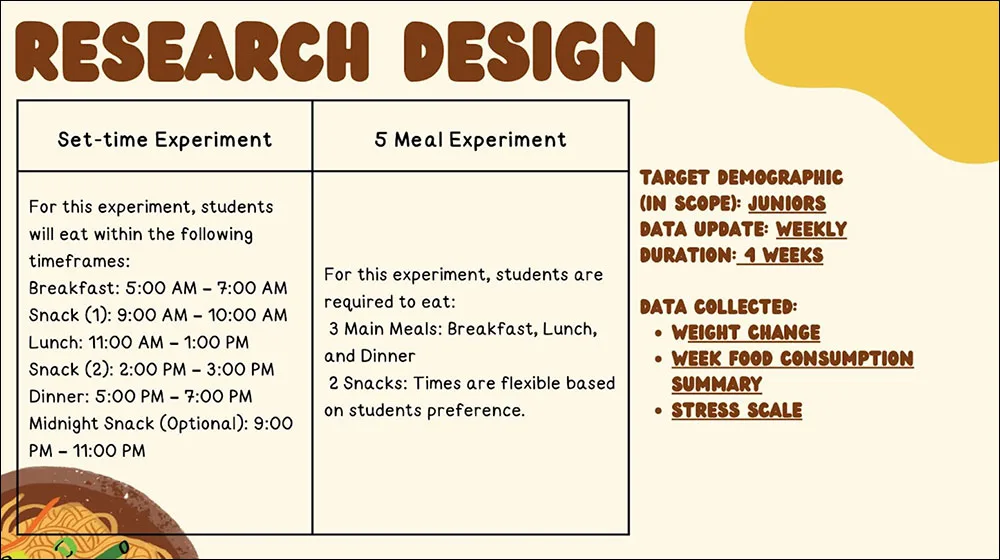
Using a Data Collection Plan, Rianne designed two four-week experiments to measure how different eating structures influenced student stress levels and weight management.
- Experiment 1: Five-Meal Experiment – Participants followed an eating schedule of five meals throughout the day: breakfast, lunch, dinner, and two snacks.
- Experiment 2: Set-Time Eating Experiment – Participants followed a strict eating schedule where those same five meals were instead consumed at specific, predetermined times each day.
Students participated in the study and were divided between the two experimental groups. Each week, participants completed surveys to measure stress levels and track changes in their eating habits and overall well-being.
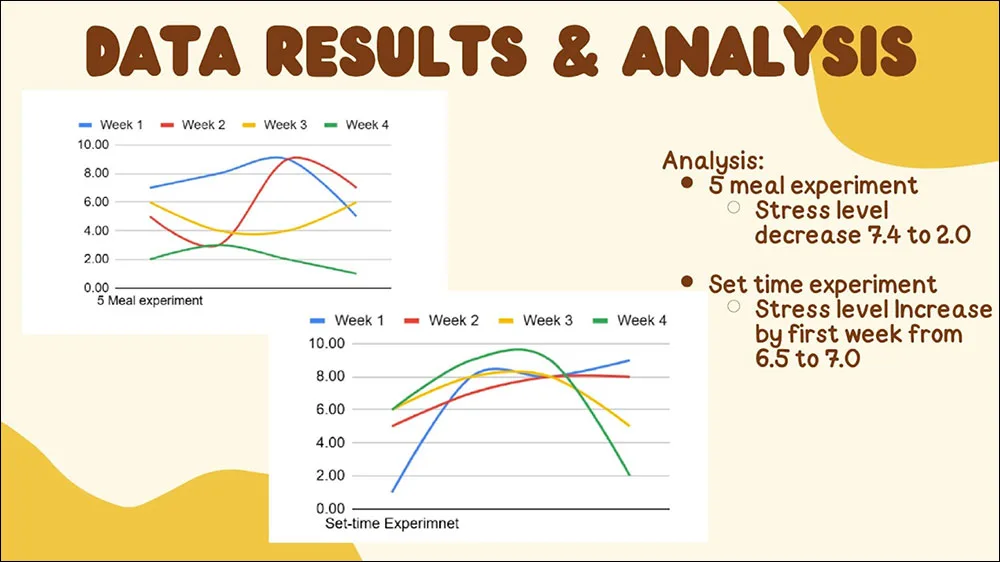
Both experiments were a success! The five-meal experiment reduced student stress levels by an average of 73%. In contrast, the set-time eating experiment initially increased stress by 7.7% during the first week before participants adjusted to the schedule.
Additionally, the five-meal experiment resulted in an average weight reduction of 1.1 kilograms among participants, while the set-time eating experiment resulted in an average weight reduction of 2.4 kilograms.
Thanks to their GLSS Training, Rianne and her team were equipped with the tools to identify and define a problem, and highlight a lasting solution. They didn’t just test stress-reducing meal schedules—they inspired others to implement a healthy habit into their everyday lives.
“GLSS Training helped me see problems differently. Instead of feeling overwhelmed, I learned how to break challenges down, analyze data, and look for practical improvements. The skills I gained through my Yellow Belt Training showed me how small changes in daily habits can lead to meaningful results, and they will continue to guide me in my future as a researcher.”