


How Farrington High School Students Improved Financial Fair’s Completion Rate With GLSS
Home » Case Study » How Farrington High School Students Improved Financial Fair’s Completion Rate With GLSS
Hawaii
Education
Finance
50%

Allison Popa
Farrington High School Student
Project Leader
I become overstimulated easily, so being in crowded, disorganized environments often makes it difficult for me to enjoy the experience. When I noticed that students were having the same experience at our Fair, I wanted to find a way to prevent it from happening again.
— Allison Popa
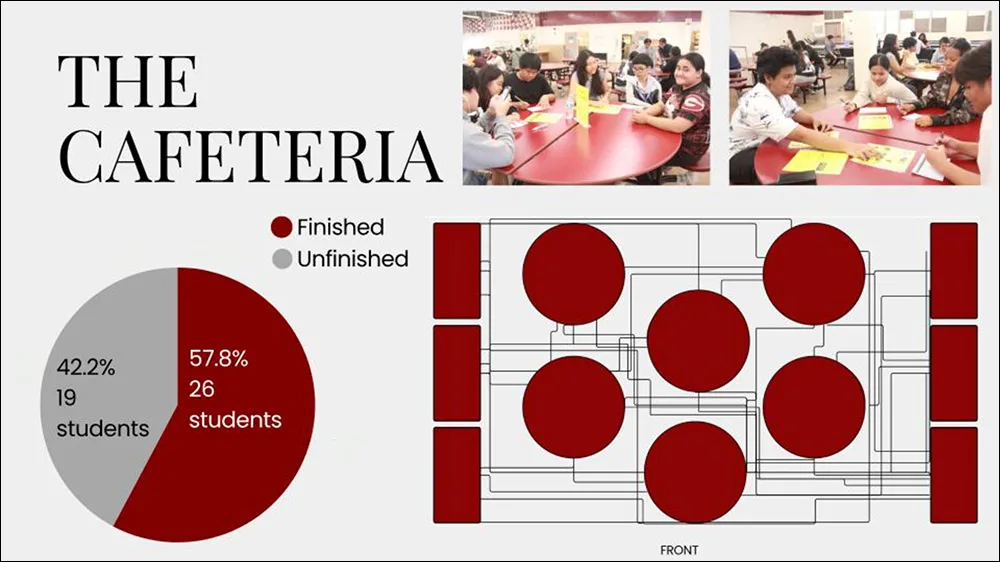
Allison gathered data on student completion during the Kuleana Fair.
After the event, Allison recorded that only 57.8% attending students completed all Fair activities. Allison wanted to reduce the number of unfinished participants and discovered that the root problem was not the process itself, but the Fair’s location.
She created Flow Maps of the Kuleana Fair in the cafeteria and in the library to compare how students moved through each layout. These maps showed where traffic bottlenecks formed, how often students skipped stations, and how much usable space was lost to large cafeteria tables, as well as where Motion and Waiting waste occurred compared to the more open library setup.
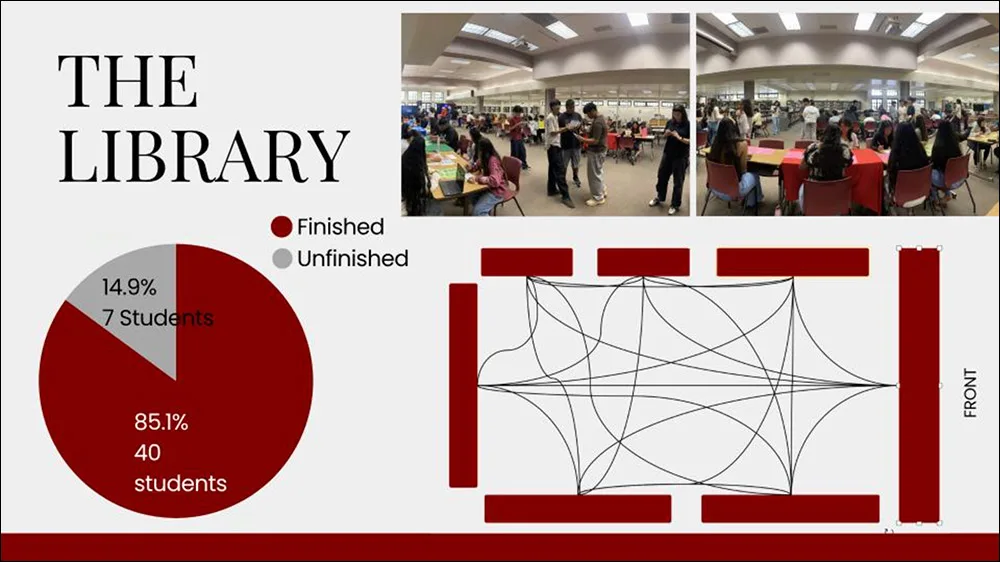
After relocating the event to the library, the student completion percentage increased to 85.1%, an improvement of 47%.
To sustain this solution, Allison created a Kuleana Fair Control Plan, including an event schematic and step-by-step setup and breakdown guide so future teams can follow the same layout and traffic flow. This simple, repeatable standard work document ensures the Fair is consistently run in the improved space and supports maintaining high completion rates.
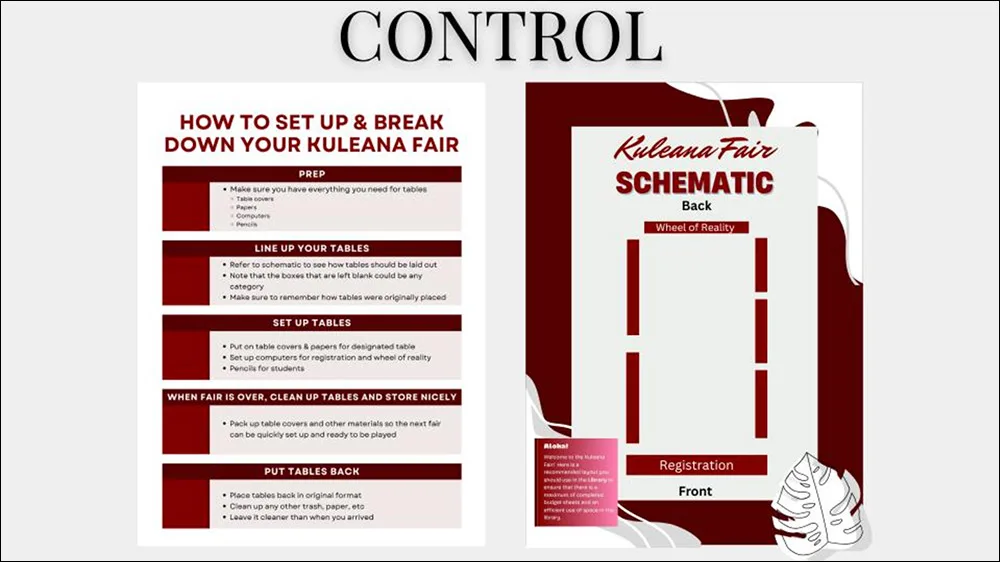
Allison’s project proved that by focusing on the root cause, results can improve dramatically. Thanks to her GLSS Training, Allison turned the Kuleana Fair around.
With GLSS’s innovative training and real-world focus, any student can discover how to solve problems, get results faster, and set the stage for a future filled with purpose.
I have learned so much throughout this experience, and I’ve actually found myself applying the skills I learned from you and the GLSS team to both my daily life and my work. It has been really rewarding to see how the concepts we learned can be applied to real-life situations.
Thank you so much for giving me the opportunity to experience GLSS and learn about ways to improve business processes. I truly appreciate everything you and the team have taught me and the experience you’ve given me.
— Allison Popa