



Tape Manufacturer Reduced Tape Breaks By 30% With GLSS
Home » Case Study » Tape Manufacturer Reduced Tape Breaks By 30% With GLSS
United States
Manufacturing
Operations
30%
- The problem: Frequent tape breaks were creating costly scrap, machine downtime, and production inefficiencies that were impacting overall manufacturing performance.
- After applying GLSS Training & Certification methods, the organization reduced tape breaks from an average of 173 to 122 instances per million pounds produced, a 30% improvement in process performance.
In the tape manufacturing industry, maintaining consistent production is essential for controlling costs, meeting customer demand, and delivering high-quality products. Even minor disruptions can create significant waste, reduce equipment availability, and impact profitability.
To address a growing issue with tape breaks, the organization partnered with GLSS’s Lean Six Sigma Green Belt Training & Certification to guide the improvement effort. The organization selected GLSS because of its practical, easy-to-apply approach to process improvement that helps teams quickly identify root causes and implement sustainable solutions. Guided by the principles of Ethical Efficiency™, the project focused on improving performance while reducing material waste, making better use of equipment and resources, and creating a more consistent and supportive environment for employees.
The organization was experiencing an excessive number of tape breaks during production. Each break interrupted manufacturing operations, generated startup scrap, and reduced machine availability.
Between May and October alone, tape breaks contributed to more than $315,000 in startup scrap costs and approximately $335,500 in lost machine-hour value. These disruptions not only increased operating expenses but also created challenges in maintaining production schedules and overall efficiency.
Because tape breaks directly affected productivity, quality, profitability, and resource utilization, the organization recognized that reducing their frequency was critical to achieving stronger operational performance and remaining competitive in the marketplace.
Working through the GLSS improvement methodology, the team conducted a detailed analysis of the production process to better understand why tape breaks were occurring so frequently.
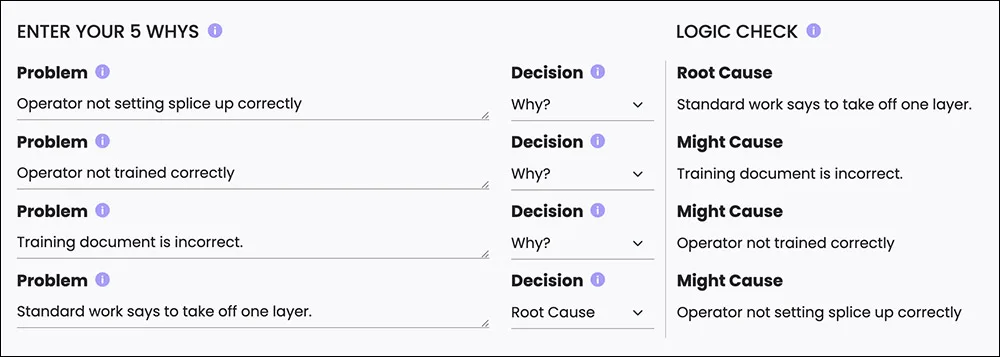
The investigation revealed that poor roll geometry was a primary contributor. When rolls were not formed consistently, tension issues and instability increased during production, making tape breaks more likely.
The team also identified opportunities to improve equipment reliability, strengthen operator response procedures, and reduce process variation through greater standardization. Together, these factors were contributing to recurring interruptions, preventable production losses, and unnecessary material waste.
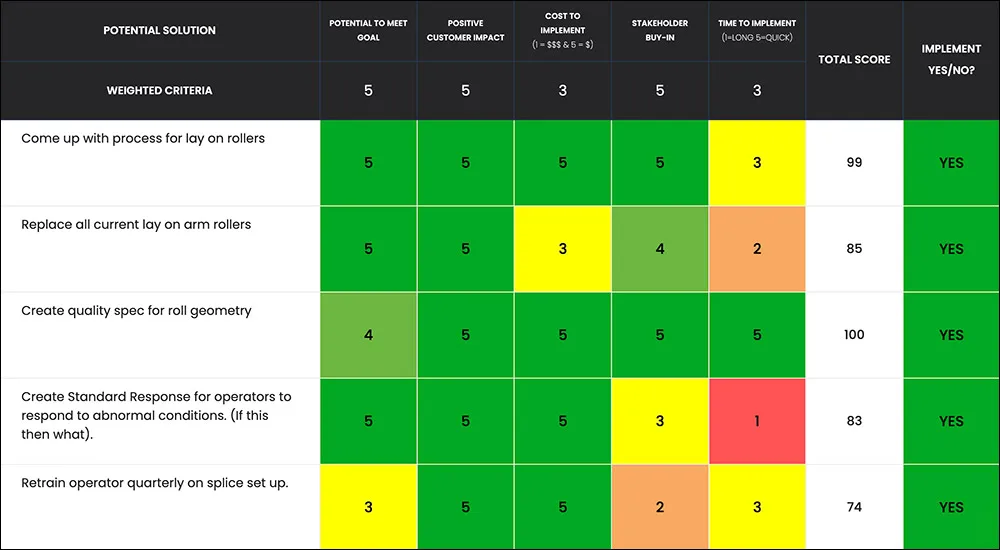
To address the identified causes, the project team implemented several targeted improvements.
- A new process for lay-on rollers was introduced to improve production consistency. Existing lay-on arm rollers were replaced to enhance equipment performance and reliability.
- The team also established clear quality specifications for roll geometry to ensure rolls consistently met defined standards before entering production.
- To improve operator response, a standardized guide was developed that provided clear instructions for handling abnormal conditions. Additional improvements included quarterly retraining on splice setup procedures and standardization of splice pad gaps to reduce variation and reinforce best practices across the operation.
These changes not only improved process performance but also supported Ethical Efficiency by reducing avoidable waste, improving consistency, and helping employees respond more confidently and effectively when issues occurred.
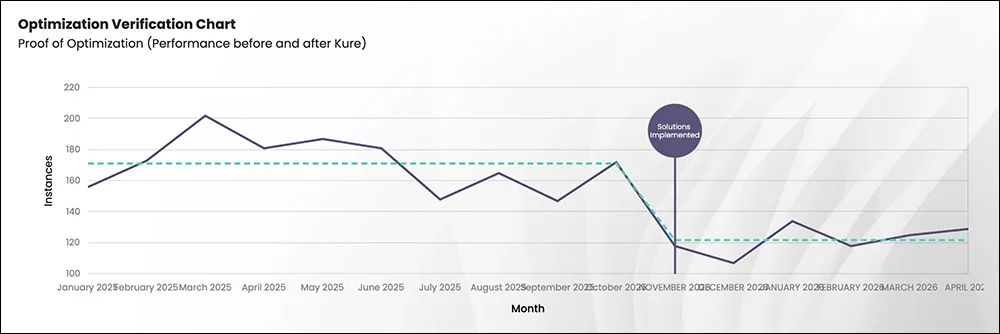
The project produced measurable improvements in manufacturing performance.
Tape break occurrences were reduced from an average of 173 instances per million pounds produced to an average of 122 instances per million pounds produced, representing a 30% reduction!
The improvements surpassed the organization’s target of 130 or fewer tape breaks per million pounds produced and delivered meaningful operational benefits. Fewer tape breaks resulted in less startup scrap, improved machine utilization, and a more efficient production flow. The organization also reduced the significant financial losses previously associated with downtime and wasted materials.
Beyond the financial gains, the improvements helped the organization use raw materials more responsibly, reduce unnecessary consumption of labor and machine capacity, and create a more stable and predictable work environment for employees. Customers also benefited from improved production reliability and more consistent product availability.
As a result, production became more predictable, reliable, and capable of supporting customer demand with greater consistency.
with GLSS
Through its partnership with GLSS Training & Certification, the organization successfully addressed a costly production challenge and achieved substantial improvements in operational performance. The team identified the underlying causes of tape breaks and implemented practical solutions that delivered measurable, sustainable results.
GLSS Training & Certification’s innovative instructional design and practical content helped the team achieve results faster while building long-term improvement capabilities throughout the organization. By reducing tape breaks, minimizing waste, improving resource utilization, and strengthening process consistency, the project demonstrated the power of Ethical Efficiency™ in action. The organization not only improved current performance but also established a stronger foundation for future success and continued operational excellence in a highly competitive manufacturing environment.
*We value our clients’ confidentiality. While the names may be anonymous, the results are real.