

City of Portland Decreased Tow Process Completion Time By 35% With GLSS
Home » Case Study » City of Portland Decreased Tow Process Completion Time By 35% With GLSS
Oregon
Government
Operations
35%
- The problem: A government organization was experiencing lengthy tow process completion times that delayed the removal of nuisance vehicles, created safety concerns in public parks, and increased frustration for both employees and community members.
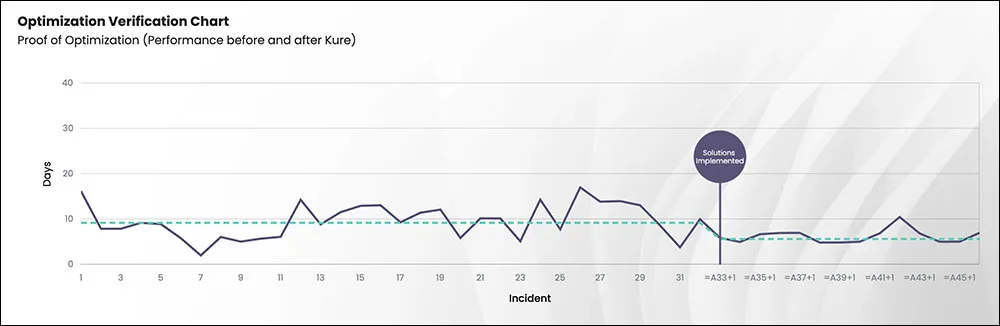
- With GLSS, the organization reduced average tow process completion time from 9.6 days to 6.2 days, a 35% improvement that accelerated vehicle removal and improved service to the public.
This government organization is responsible for maintaining safe, clean, and welcoming public spaces for residents and visitors. To meet these expectations, departments must continually evaluate their processes and look for opportunities to improve efficiency, responsiveness, and service quality. Even routine activities can create unnecessary delays when policies are unclear or procedures have not evolved to meet operational needs.
To address a growing challenge involving nuisance vehicles on park properties, the organization utilized GLSS’s Lean Six Sigma Green Belt Training & Certification to strengthen its process improvement capabilities. The team selected GLSS because of its practical, project-based approach that helps organizations quickly identify root causes and implement sustainable improvements. The project focused on reducing delays in the tow process while improving the experience for employees and the community. Guided by the principles of Ethical Efficiency™, the team worked to improve performance without creating additional burdens on staff or compromising public service.
Nuisance vehicles were often remaining on park property longer than leaders, employees, and community members considered acceptable. These vehicles created safety concerns, detracted from the appearance of public parks, and increased the risk of debris, hazardous spills, and additional maintenance work.
The process for removing these vehicles was taking an average of 9.6 days to complete. The lengthy timeline created frustration for staff who were required to perform repetitive administrative tasks and respond to complaints from park visitors. Delays also prevented resources from being used as effectively as possible and reduced the department’s ability to respond quickly to issues affecting public spaces.
For government organizations, process improvement is critical because every delay impacts both public service and taxpayer-funded resources. Leadership recognized that improving the tow process would help create safer public spaces, improve employee productivity, reduce waste, and strengthen community satisfaction.
The project team carefully reviewed the existing tow process to understand why vehicles remained on park property for extended periods.
Their analysis revealed that outdated and unclear policies were the primary source of delays. Staff members were required to follow procedures that included sending letters to vehicle owners and navigating policies that did not clearly define timelines, responsibilities, or decision points.
Because procedures were often interpreted differently, employees frequently spent additional time determining the correct course of action. This inconsistency created unnecessary waiting, duplicate effort, and slower vehicle removal. Without clear guidance, staff were forced to spend valuable time managing administrative complexity rather than focusing on serving the community.
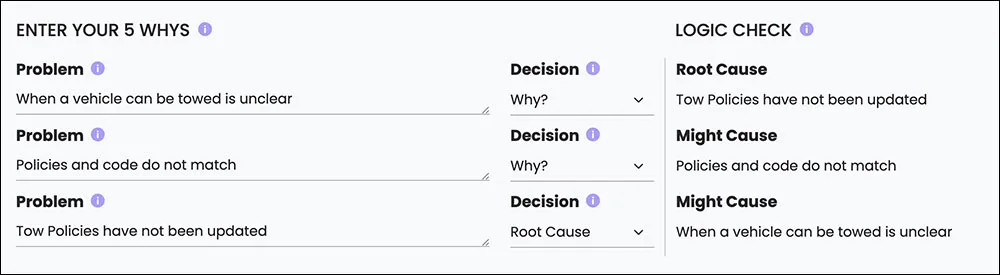
Using the Lean Six Sigma tools learned through GLSS Training & Certification, the project team identified several opportunities to streamline the process.
One of the most significant improvements was eliminating the requirement to send a letter to the vehicle owner, removing a major source of delay. The team also revised policies to establish clearer timelines for towing activities and better define when actions could proceed.
In addition, procedures were clarified so employees could quickly determine which process to follow in various situations. Supporting work aids and guidance materials were developed to improve consistency, reduce uncertainty, and make decision-making easier for staff throughout the department.
These changes simplified the workflow, reduced waiting time, and created a more efficient and predictable process for managing nuisance vehicle removal.
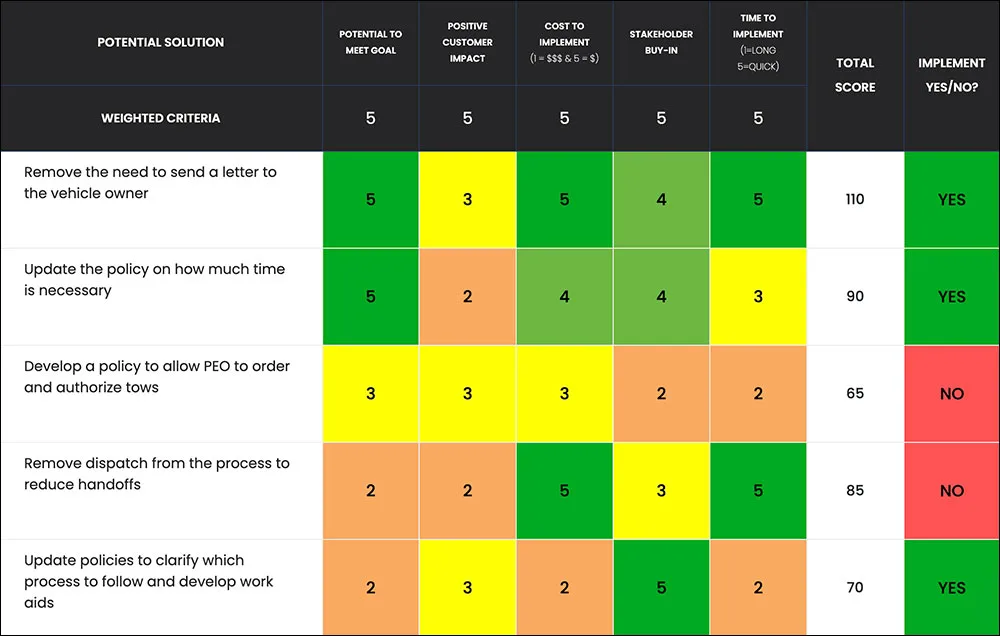
The project delivered meaningful and measurable improvements for the organization. Before the improvements were implemented, the average time required to complete the tow process from the initial report of a nuisance vehicle to final vehicle removal was 9.6 days.
After the team implemented updated policies, clearer procedures, and supporting work aids, the average tow process completion time decreased to 6.2 days. This reduction of 3.4 days improved overall process performance by approximately 35% and enabled nuisance vehicles to be removed much faster and more consistently.
The shorter timeline helped keep public parks cleaner, safer, and more welcoming for residents and visitors. Employees spent less time navigating unclear procedures and performing redundant administrative tasks, allowing them to focus more attention on activities that directly support the community. Maintenance teams also experienced fewer issues involving abandoned vehicles, debris, and potential environmental hazards.
By reducing delays and improving consistency, the organization strengthened its ability to respond to nuisance vehicle issues while making more effective use of available resources. The project demonstrated how a focused improvement effort can generate measurable results that benefit employees, operations, and the public alike.
with GLSS
Through its partnership with GLSS Training & Certification, the organization successfully streamlined its tow process and significantly reduced the time required to remove nuisance vehicles from park properties. By addressing policy-related barriers and simplifying procedures, the team improved operational performance while enhancing service to the community.
GLSS’s innovative instructional design and practical Training & Certification approach helped the team achieve results quickly by focusing on real-world application rather than theory alone. Participants learned skills they could immediately apply to identify problems, analyze root causes, and implement effective solutions that produce measurable outcomes.
The project also demonstrates the power of Ethical Efficiency™ by improving performance in a way that benefits employees, the community, and the organization simultaneously. With a faster and more consistent tow process now in place, the organization is well positioned to continue building a culture of continuous improvement and delivering even greater value to the citizens it serves in the years ahead.
*We value our clients’ confidentiality. While the company name may be anonymous, the results are real.