


Medical Supply Manufacturer Reduced Tube Assembly Cycle Time By 25% With GLSS
Home » Case Study » Medical Supply Manufacturer Reduced Tube Assembly Cycle Time By 25% With GLSS
Ohio
Manufacturing
Operations
25%
- The problem: This medical supply manufacturer was struggling to meet production targets because inefficiencies in its tubing assembly process created delays, increased labor demands, and limited overall output.
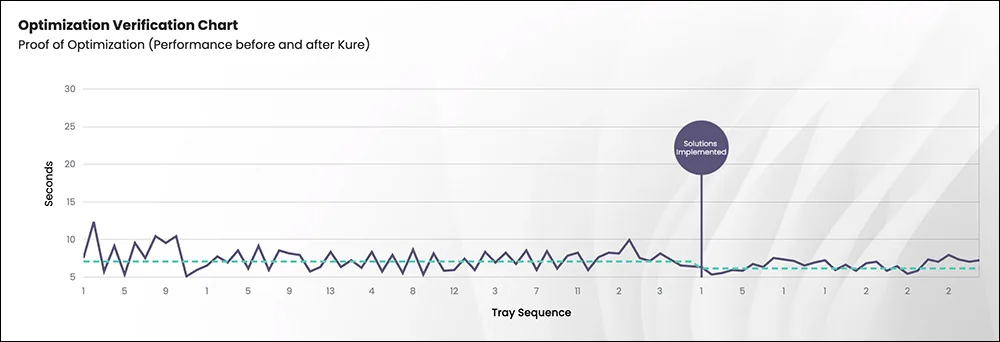
- After applying GLSS Lean Six Sigma methods, the organization reduced manual assembly cycle time from 8.4 seconds to 6.3 seconds, a 25% reduction in cycle time that contributed to a 33% increase in throughput and moved production closer to its target of 4,000 units per operator per shift.
In the medical supplies industry, speed, reliability, and consistency are critical. Healthcare providers depend on timely product availability, making efficient manufacturing operations essential to meeting customer expectations. Even small inefficiencies on the production floor can lead to missed targets, increased costs, and additional pressure on employees.
Recognizing an opportunity to improve performance, a medical supply manufacturer partnered with GLSS’s Lean Six Sigma Green Belt Training & Certification to strengthen its process improvement capabilities and address challenges within its tubing assembly operation. Led by Ali Skima, the project team leveraged GLSS Lean Six Sigma tools and methods to identify opportunities for improvement and implement practical solutions that delivered measurable results.
Throughout the project, the team embraced the principles of Ethical Efficiency™, focusing not only on improving productivity but also on creating a better experience for employees. Rather than increasing workload or adding staffing, the project sought to remove unnecessary work, simplify processes, and allow operators to focus on value-added activities.
The tubing assembly process was consistently underperforming against production expectations. Operators were averaging approximately 3,000 units per shift, well below the organization’s goal of 4,000 units. At the same time, the average assembly cycle time was 8.4 seconds per unit, limiting throughput and creating a significant production gap.
As demand continued to grow, the organization found itself relying on overtime and additional labor resources to maintain customer commitments. This approach increased operating expenses while creating ongoing stress for employees working to keep pace with production requirements.
Leadership recognized that adding more personnel would only provide a temporary solution. To remain competitive and support future growth, the organization needed a more efficient process capable of increasing output without increasing labor costs.
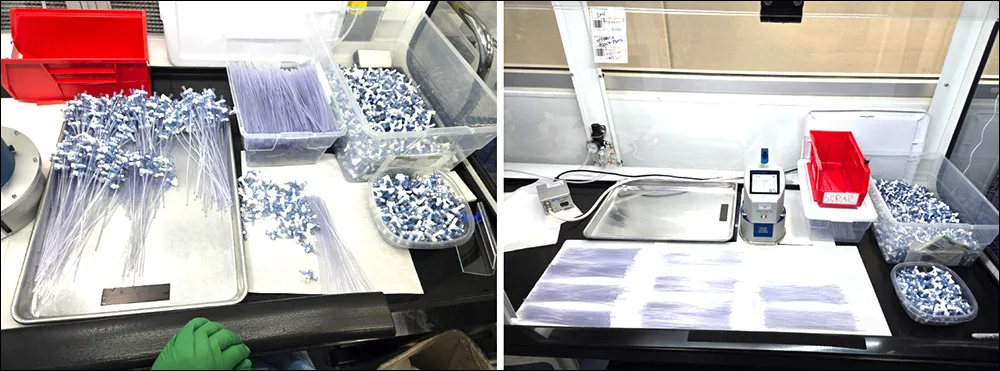
Using GLSS Lean Six Sigma tools, the project team analyzed the process and uncovered several factors contributing to the performance gap.
One of the largest sources of inefficiency was the manual counting of parts during assembly. Operators spent valuable production time counting components even though quantities were already verified later in the process using a precision scale during packaging. This duplicate verification activity added more than 17 minutes of non-value-added work to each batch.
The team also discovered workflow imbalances between assembly and measurement activities. Frequent interruptions caused by manual counting and tray loading slowed production and prevented operators from maintaining a steady flow of work.
In addition, existing procedures relied heavily on manual verification methods rather than more efficient weight-based measurement techniques that were better suited for high-volume production environments.
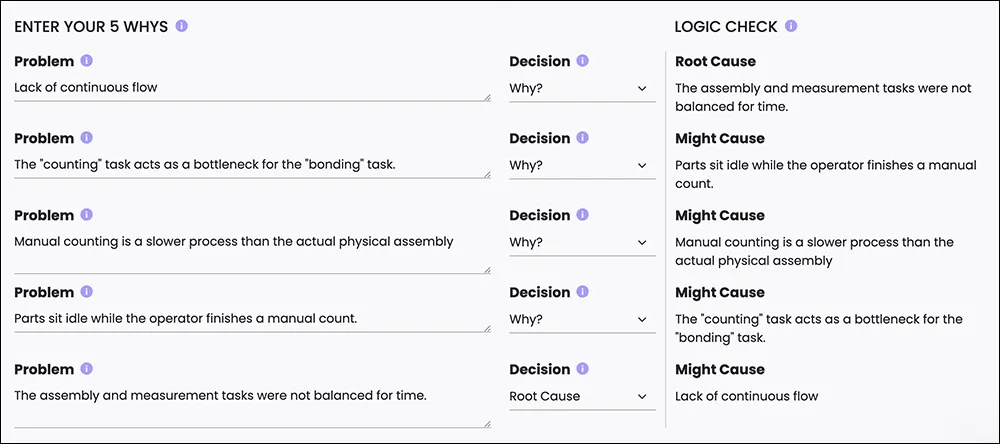
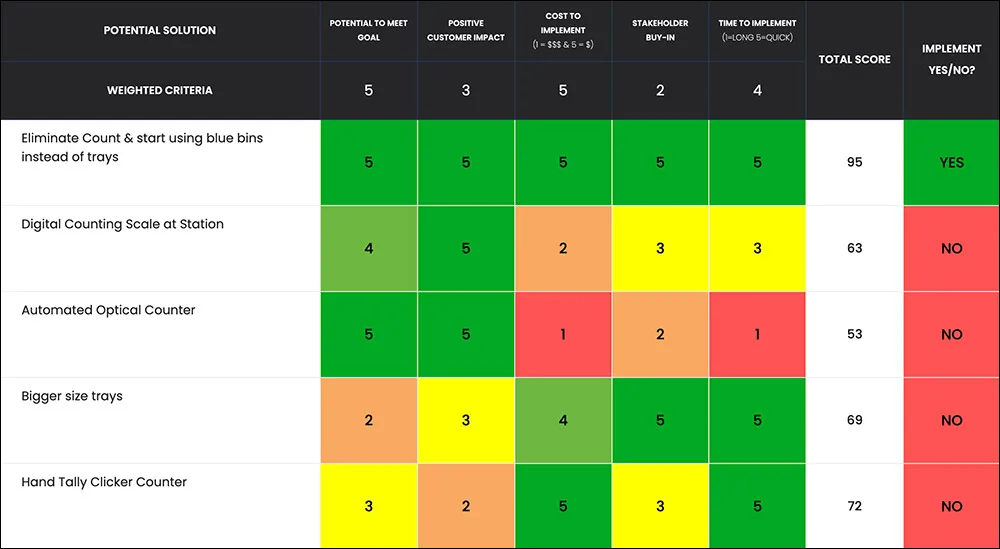
Drawing on the knowledge gained through GLSS Training & Certification, the team redesigned the process to eliminate unnecessary work and improve flow.
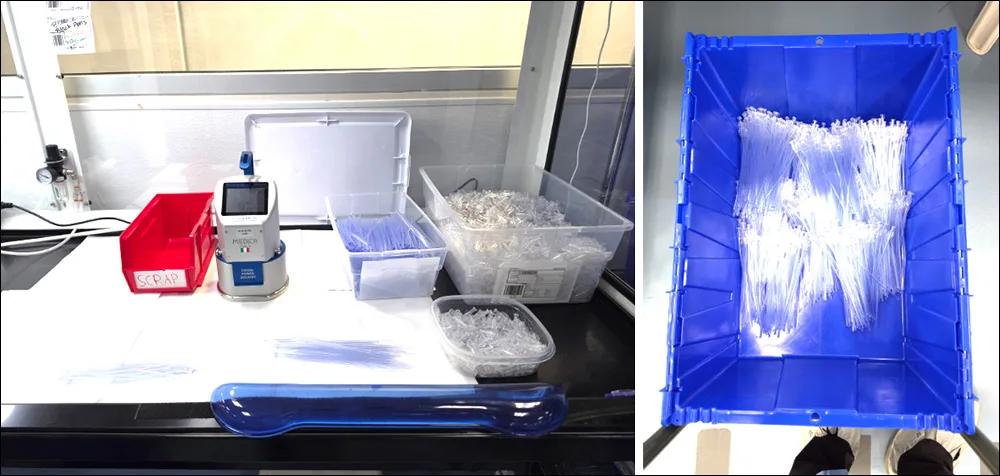
The most impactful change involved removing manual counting from the assembly process. The team implemented a bulk-handling “Blue Bin” system that allowed operators to access materials more efficiently and work with fewer interruptions. Quantity verification was shifted to end-of-shift precision scale weighing, providing accurate counts without disrupting production.
The new approach also eliminated tray loading activities that previously slowed operators and created unnecessary handling. As a result, employees were able to focus more time on assembling products and less time on administrative tasks.
The solutions were straightforward, cost-effective, and easy to adopt, allowing the organization to improve performance without adding equipment or personnel.
The project delivered meaningful improvements in both efficiency and productivity.
Manual Assembly Cycle Time
- Before: 8.4 seconds
- After: 6.3 seconds
- Improvement: 25% reduction in cycle time
Production Throughput
- Before: Approximately 3,000 units per operator per shift
- After: Progress toward 4,000 units per operator per shift
- Improvement: 33% increase in throughput
Beyond the measurable gains, the organization reduced its dependence on overtime, avoided additional staffing costs, and created a smoother production experience for operators. The improved workflow also helped stabilize scheduling and better support customer demand.
with GLSS
This project demonstrates how targeted process improvements can unlock substantial operational gains without requiring significant investments or additional labor. By applying GLSS Lean Six Sigma methods, the medical supply manufacturer successfully removed waste, streamlined workflow, and increased production capacity.
GLSS Training & Certification’s innovative instructional design and practical, real-world content helped the team move quickly from learning to implementation, accelerating results while building lasting process improvement skills. Guided by the principles of Ethical Efficiency™, the project improved performance in a way that benefited both the organization and its employees by reducing unnecessary work rather than increasing workload.
With a more efficient and scalable process now in place, the organization is well positioned to continue improving operational performance, strengthen customer responsiveness, and support future growth with confidence.
*We value our clients’ confidentiality. While the names may be anonymous, the results are real.