Food Manufacturer Reduced Raw Material Release Time By 39% With GLSS
Home » Case Study » Food Manufacturer Reduced Raw Material Release Time By 39% With GLSS
LOCATION
Missouri
INDUSTRY
Manufacturing
FUNCTION
Operations
IMPROVEMENT
39%
PROJECT SUMMARY
The problem: A food manufacturer was experiencing delays in raw material release evaluations that created production bottlenecks, slowed scheduling, and reduced operational efficiency across the facility.
With GLSS, the organization reduced average raw material release time from 23 minutes to 14 minutes, improving the process by approximately 39% while creating a more organized and consistent workflow.
INTRODUCTION
As a food manufacturing company focused on delivering high-quality ingredients and products, this organization understands the importance of maintaining both speed and quality across its operations.
In food processing environments, even small delays in releasing raw materials can create ripple effects that impact production schedules, team productivity, and overall operational performance.
To address these challenges, the organization partnered with GLSS’s Lean Six Sigma Green Belt Training & Certification to improve the efficiency of its raw material evaluation process. The team selected GLSS because of its practical, easy-to-understand approach that helps organizations quickly identify opportunities for improvement and implement sustainable solutions. Guided by the principles of Ethical Efficiency™, the project focused not only on improving speed, but also on creating a cleaner, more consistent, and more supportive work environment for employees while maintaining strong quality standards.
THE PROBLEM
At this food manufacturer, the process for evaluating and releasing raw materials was taking longer than desired. Average raw material release time was approximately 23 minutes, creating delays that affected both laboratory operations and production flow.
These delays made production scheduling more difficult and reduced efficiency in warehouse and production areas that depended on timely material availability. Team members also experienced frustration when materials were not released quickly enough to support smooth operations.
For a food processing organization, process improvement work is critical because delays can impact productivity, operational costs, workflow coordination, and customer expectations. Improving release time was important to helping the organization maintain strong operational performance while continuing to support quality and safety throughout the organization.
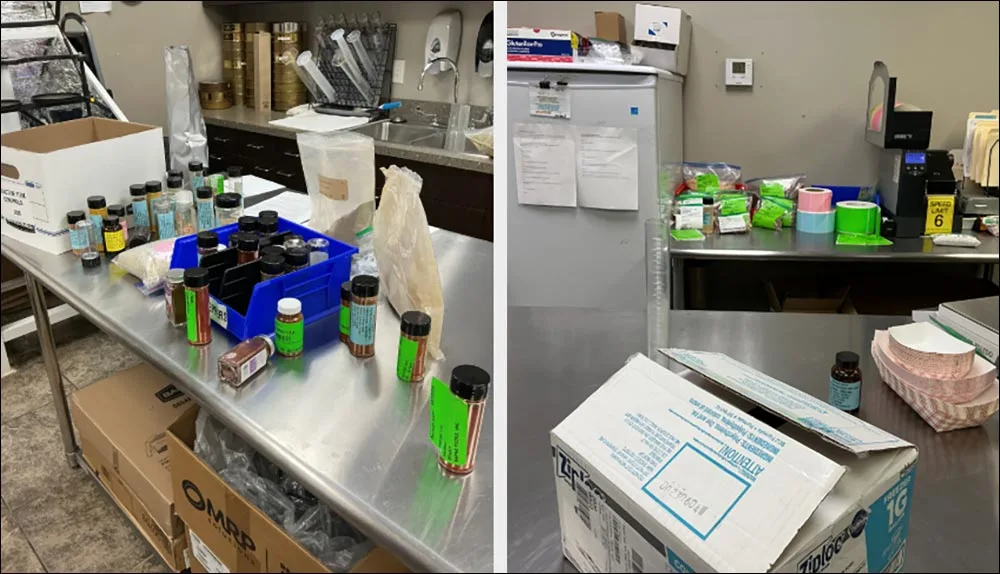
Before
THE ROOT CAUSES
Using the structured improvement methods learned through GLSS Training & Certification, the team identified several factors contributing to the delays.
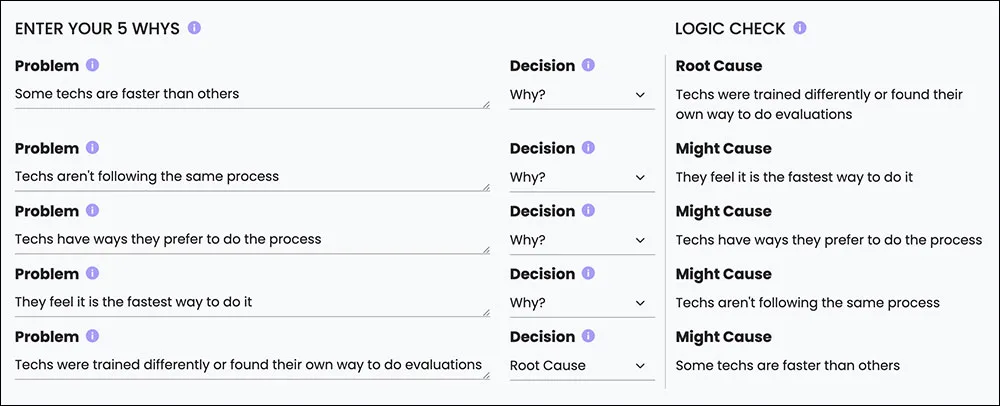
One major issue was inconsistency in how technicians performed evaluations. Different training experiences and individual work habits created variation in evaluation times and workflows.
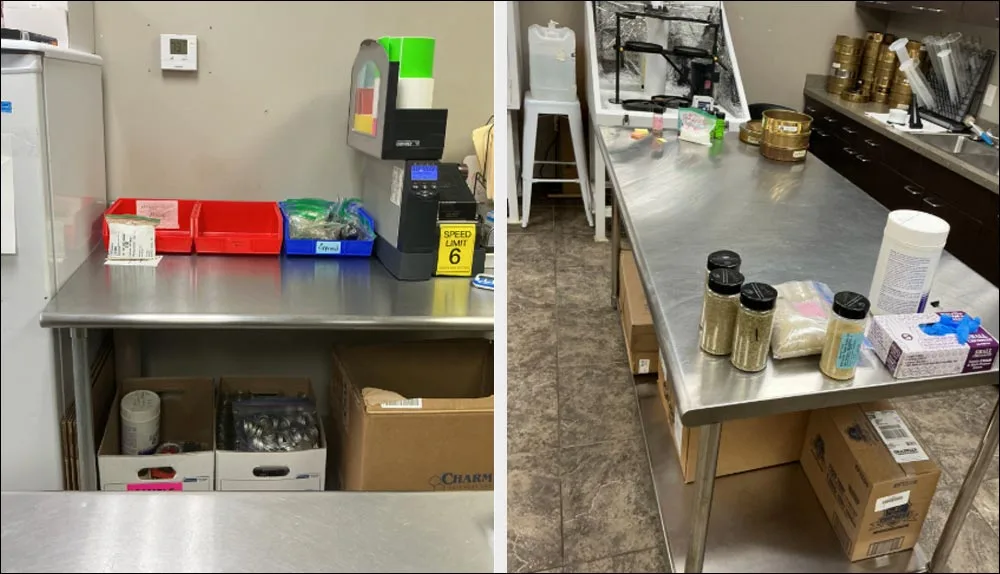
The team also found that materials, controls, and utensils were not always returned to their proper locations after use. This created unnecessary clutter and wasted time as technicians searched for needed items.
In addition, inconsistent training across team members led to uneven workflows, while limited attention to Quarantine List due dates contributed to avoidable delays in material processing and release.
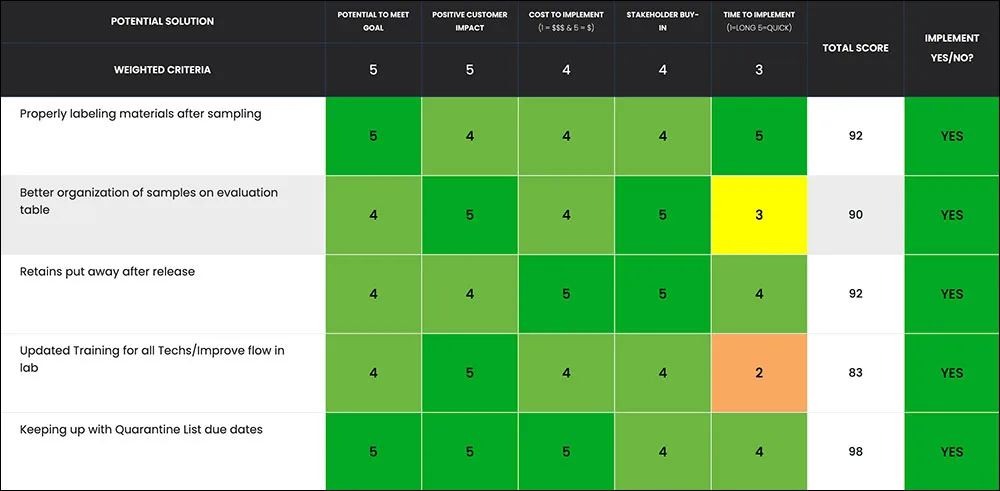
The team implemented several practical improvements designed to create a more organized and standardized process.
Standardized Labeling: Materials were consistently labeled after sampling to improve clarity and reduce confusion during evaluations.
Improved Workspace Organization: Samples and evaluation materials were organized more effectively on the evaluation table, allowing technicians to work more efficiently.
Put-Away Discipline: Retains, materials, and utensils were consistently returned to their designated locations after use to maintain a clean and efficient workspace.
Updated Training: All technicians received updated training to ensure a consistent approach to evaluations and improve workflow reliability.
Better Tracking: The team placed greater focus on monitoring Quarantine List due dates to help prevent unnecessary delays and improve responsiveness.
Together, these improvements created a more structured, predictable, and efficient raw material evaluation process.
To automate the creation of the Solution Selection Matrix, try Kure.
THE RESULTS
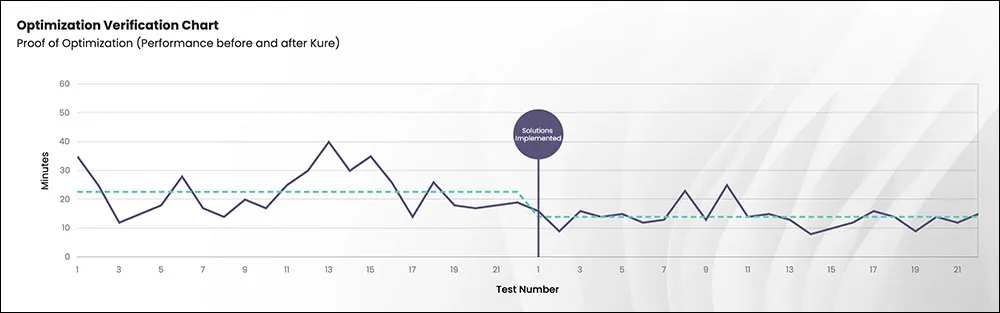
The project delivered significant improvements for the manufacturer. Average raw material release time decreased from 23 minutes to 14 minutes, representing an improvement of approximately 39%.
With improved organization, standardized workflows, and more consistent training, technicians were able to complete evaluations more efficiently and with less variation. The improved process also helped materials move faster into production, reducing delays and improving coordination between teams.
As a result, both laboratory and production staff experienced smoother workflows, improved scheduling, and higher overall satisfaction with daily operations.
To automate the creation of the Verification Chart, try Kure.
Start improving with GLSS
This project demonstrates how standardization, organization, and consistent processes can create measurable improvements in a food manufacturing environment. By addressing workflow inconsistencies and improving workplace organization, this organization successfully reduced delays and improved operational efficiency.
GLSS Training & Certification played an important role in helping the team achieve results quickly through its innovative instructional design, practical tools, and real-world application approach. The project also reflected the principles of Ethical Efficiency™ by improving performance while supporting employees with clearer processes, better organization, and a more effective work environment.
With these improvements now in place, the organization is well positioned to continue strengthening operational performance, maintaining product quality, and supporting future growth.
After
*We value our clients’ confidentiality. While the company name may be anonymous, the results are real.
Start a free trial and get access to all GLSS courses (Yellow Belt, Green Belt, Black Belt, and more!) for only $499/year with a GLSS Subscription!