

Healthcare System Improved Restraint Compliance By 50% With GLSS
Home » Case Study » Healthcare System Improved Restraint Compliance By 50% With GLSS
Missouri
Healthcare
Operations
50%
- The problem: Inconsistent restraint documentation created compliance risks and made it difficult for this healthcare system to ensure consistent patient safety practices.
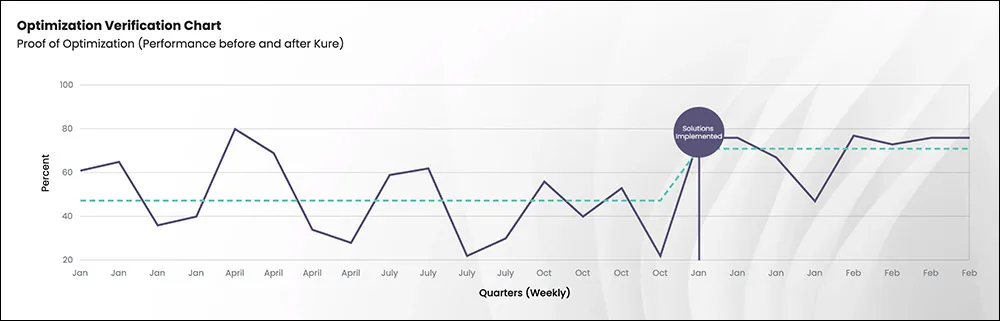
- Through a focused improvement effort led by Katie Jacob, weekly restraint compliance scores increased from 47% in 2025 to 71% in 2026, representing a 50% improvement.
Healthcare organizations operate in an environment where patient safety, regulatory compliance, and high-quality care must work together seamlessly. Many hospital processes are governed by strict standards, and even small documentation gaps can create risks during regulatory surveys or impact patient safety.
At a regional healthcare system, leaders recognized an opportunity to strengthen restraint documentation practices across the organization. Because restraint use directly affects patient safety and patient rights, maintaining accurate and consistent documentation is essential. Improvement work offered a clear path to reduce variation and ensure that safety protocols were followed consistently.
To support this effort, the organization turned to GLSS’s Lean Six Sigma Green Belt Training & Certification. The GLSS approach provided a practical framework for identifying root causes, testing solutions, and implementing improvements quickly. Guided by the principle of Ethical Efficiency™, the team focused on improving compliance while ensuring that patient care remained safe, respectful, and reliable.
Project lead Katie Jacob helped guide the effort, working with clinical leaders and staff to apply Lean Six Sigma tools to a critical patient safety process.
Before the improvement project began, the regional healthcare system identified concerns with the consistency of restraint documentation across clinical areas. Because restraint use is highly regulated, documentation must clearly demonstrate that safety protocols and patient rights protections are being followed.
However, documentation practices varied across units. Some required steps were missed, while others were completed late or inconsistently. These gaps increased the risk of deficiencies during CMS and Joint Commission surveys and made it difficult for the organization to confidently demonstrate compliance.
Another challenge was limited monitoring. At the time, the organization audited only 10 restraint cases per quarter, which made it difficult to identify trends or respond quickly when documentation issues occurred.
Leaders recognized that improving documentation consistency and increasing monitoring would be essential to strengthening compliance and protecting patients.
The team discovered that the restraint documentation workflow was more complex than many staff realized. In fast-paced clinical environments, caregivers must manage multiple priorities while caring for patients with urgent needs. The documentation process lacked clear prompts and safeguards to guide staff through each required step, which sometimes led to incomplete records.
The team also identified gaps in ongoing education. Most training occurred during employee orientation or only after a compliance issue was identified. Without consistent reinforcement during daily operations, some staff were unsure about the most critical documentation requirements.
Together, these factors contributed to inconsistent documentation and increased compliance risk.
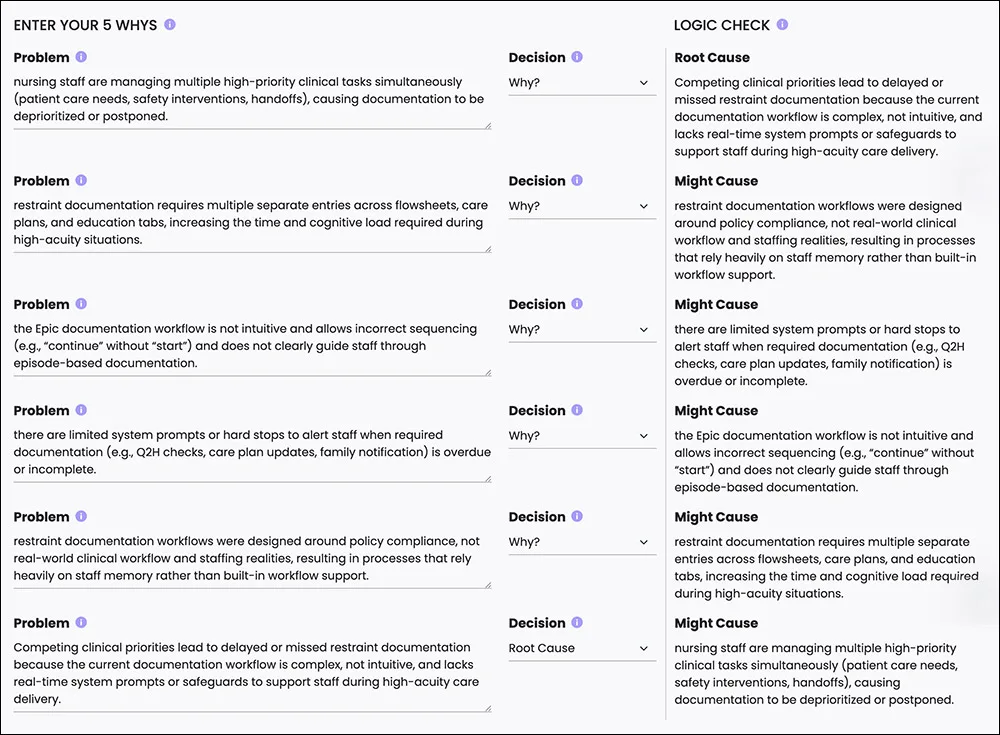
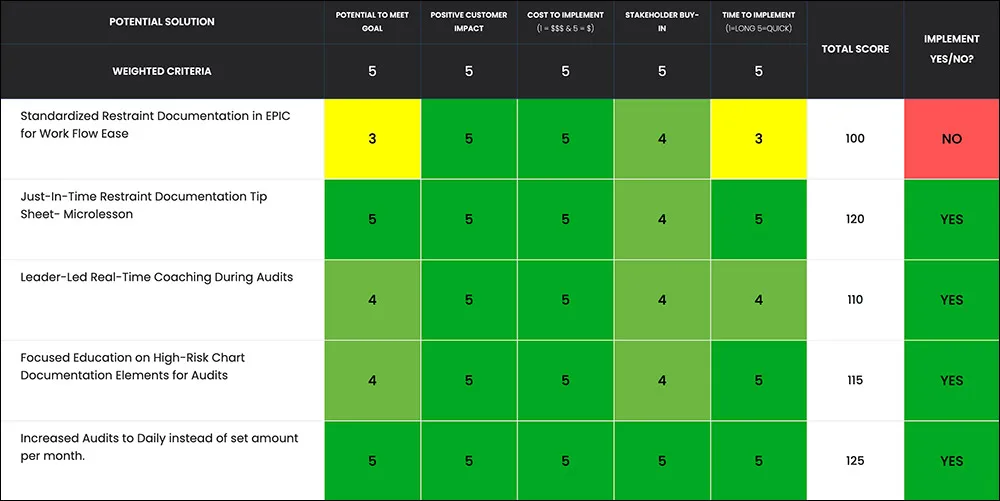
To address these challenges, the improvement team implemented several targeted solutions designed to support staff and simplify the process:
- First, they created a Just-In-Time Restraint Documentation Tip Sheet delivered as a short micro-lesson. This quick reference guide clarified key documentation requirements and provided simple reminders that staff could easily access during patient care.
- Next, leaders introduced real-time coaching during audits. Clinical leaders reviewed documentation and provided immediate feedback, helping staff reinforce correct practices and resolve questions quickly.
- The team also developed focused education on high-risk documentation elements, ensuring that staff understood the specific areas most commonly reviewed during regulatory audits.
- Finally, the organization expanded monitoring by increasing audit frequency from a small quarterly sample to daily restraint documentation reviews. This allowed leaders to identify issues sooner, provide immediate support, and reinforce compliance expectations across units.
The improvement effort created a stronger and more reliable process for monitoring restraint documentation.
Weekly restraint compliance scores improved from 47% in 2025 to 71% in 2026, representing a 50% improvement in compliance performance.
In addition, the organization strengthened accountability by transitioning ownership of restraint documentation oversight to unit leadership. Daily audits now provide continuous visibility into performance, while established escalation pathways ensure that documentation concerns are addressed quickly.
These changes have created a more consistent approach to documentation while reinforcing patient safety protections across clinical areas.
with GLSS
This project highlights how structured improvement methods can strengthen both compliance and patient safety in healthcare.
Through GLSS Training & Certification, the team gained practical tools to identify root causes, implement effective solutions, and achieve measurable results in a short period of time. GLSS’s innovative instructional design helps teams move quickly from learning concepts to applying them in real-world situations.
Equally important, the project reflects the principles of Ethical Efficiency™. By improving documentation practices, the team not only increased compliance but also strengthened the safeguards that protect patients and ensure responsible care.
With stronger monitoring systems, clearer education, and improved accountability, the organization is now better positioned to maintain compliance, protect patient rights, and pursue future improvement opportunities with confidence.
*We value our clients’ confidentiality. While we’ve changed their names, the results are real.