
Regional Medical Center Improved Respiratory Therapy Documentation Compliance By 33% With GLSS
Home » Case Study » Regional Medical Center Improved Respiratory Therapy Documentation Compliance By 33% With GLSS
North Carolina
Healthcare
Operations
33%
- The problem: Respiratory therapy documentation compliance at a Regional Medical Center had fallen to 67%, creating gaps in patient records, communication challenges among care teams, and increased compliance and revenue risk.
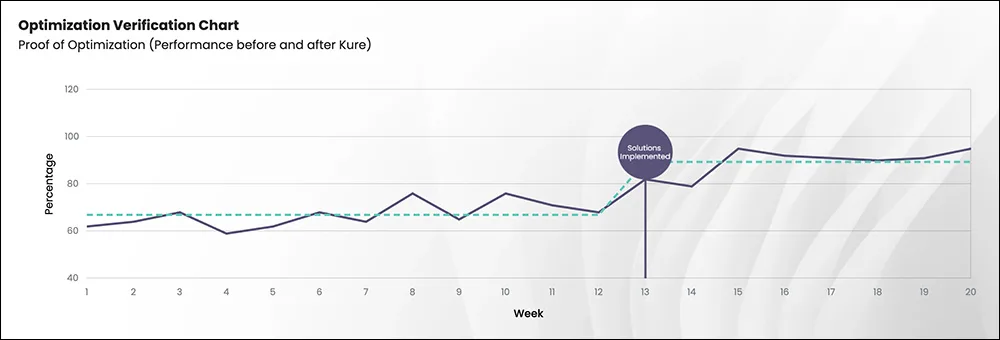
- By implementing standardized documentation policies, structured onboarding feedback, and weekly audits, the team increased compliance from 67% to over 89%—a 33% improvement with sustained performance above target levels.
At a Regional Medical Center in the Southeastern United States, delivering safe, high-quality care depends on accurate and timely documentation. When charting is complete and consistent, care teams communicate clearly, patients receive coordinated treatment, and the organization protects both compliance and reimbursement.
When respiratory therapy documentation compliance began trending below expectations, leadership recognized that structured improvement work was essential. The organization selected GLSS Training & Certification, to guide the effort. The program’s practical, project-based design provided a clear roadmap to solve the issue quickly and effectively.
The team embraced Ethical Efficiency™, focusing on improving systems in a way that supports both caregivers and patients. Rather than placing blame, they concentrated on strengthening processes to make high-quality documentation easier and more consistent.
Respiratory therapy documentation in the electronic medical record (EMR)—including breath sounds, ventilator checks, aerosol therapy notes, and patient assessments—had an average compliance rate of just 67%, well below departmental standards.
Incomplete charting created serious challenges. Patient records contained gaps. Care teams sometimes lacked important clinical details. Staff spent additional time searching for missing documentation. In addition, incomplete records increased the risk of lost charges and compliance concerns.
In healthcare, documentation directly impacts patient safety, regulatory standards, and financial health. Improving compliance was not simply about charting—it was critical to sustaining high-quality care across the organization.
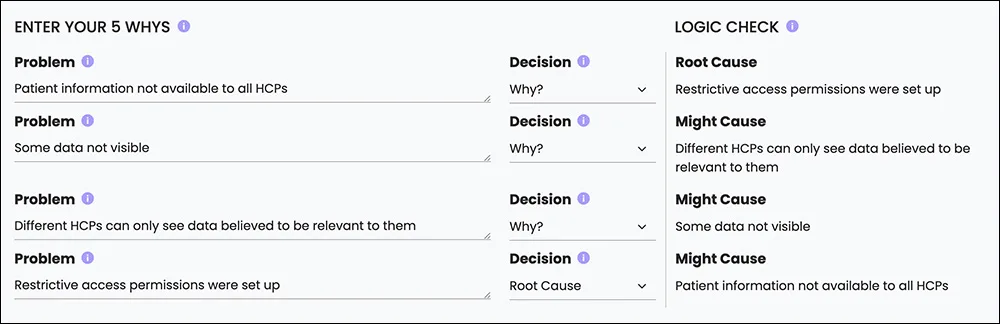
Using tools learned through GLSS Training & Certification, the team identified three primary root causes:
- First, restrictive EMR access permissions made it difficult for respiratory therapists to consistently complete documentation.
- Second, new hires were not receiving structured, consistent feedback during orientation. Without clear reinforcement of expectations, documentation gaps began early.
- Third, there was no standardized documentation process. Practices varied by individual and shift, leading to inconsistent compliance.
The team quickly recognized that the issue was not a lack of effort. It was a lack of clarity, structure, and reinforcement.
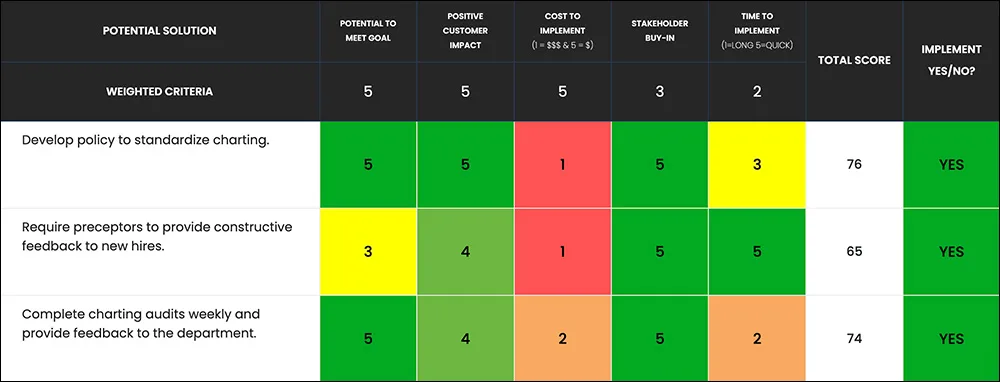
The team implemented three targeted, sustainable solutions:
- They developed and launched a standardized documentation policy that clearly defined what must be charted, when it must be completed, and how it should be documented in the EMR.
- They required preceptors to provide structured feedback to new hires during orientation, reinforcing documentation expectations from day one.
- Finally, they introduced weekly chart audits. Results were shared department-wide to increase visibility, accountability, and coaching. Importantly, audits were positioned as a learning tool, not a punishment, supporting a culture of continuous improvement.
Each solution was intentionally simple and practical, designed to make the right action the easy action.
The improvements generated immediate and sustained impact. Documentation compliance increased from 67% to over 89%—a 33% improvement. Even more importantly, compliance has remained consistently above that level.
Patient records are now more complete. Communication between care teams has improved. Staff spend less time tracking down missing information. The department also reduced the risk of lost charges by ensuring required documentation is consistently completed.
What began as a compliance concern became a catalyst for strengthening the entire respiratory therapy documentation process.
with GLSS
Through GLSS Training & Certification, this Regional Medical Center applied a structured, easy-to-follow improvement framework that delivered measurable results quickly.
The program’s innovative instructional design helped the team move from identifying root causes to implementing sustainable solutions with confidence.
Ethical Efficiency™ was central to the project’s success. By improving the system instead of blaming individuals, the team created lasting change that supports therapists, protects patients, and strengthens operational performance.
This project did more than raise compliance rates—it built internal capability. With clearer standards, stronger onboarding, and a proven improvement framework now in place, the organization is better positioned to tackle future challenges faster and more effectively.
When healthcare teams are equipped with the right tools and mindset, meaningful improvement isn’t just possible, it’s sustainable.
*We value our clients’ confidentiality. While we’ve changed their names, the results are real.