


Technology Company Decreased New Hire Onboarding Time By 33% With GLSS
Home » Case Study » Technology Company Decreased New Hire Onboarding Time By 33% With GLSS
Oregon
Technology
Operations
33%
- The problem: A technology company was experiencing a lengthy and inconsistent onboarding process that delayed new employee productivity, increased costs, and placed additional strain on existing team members.
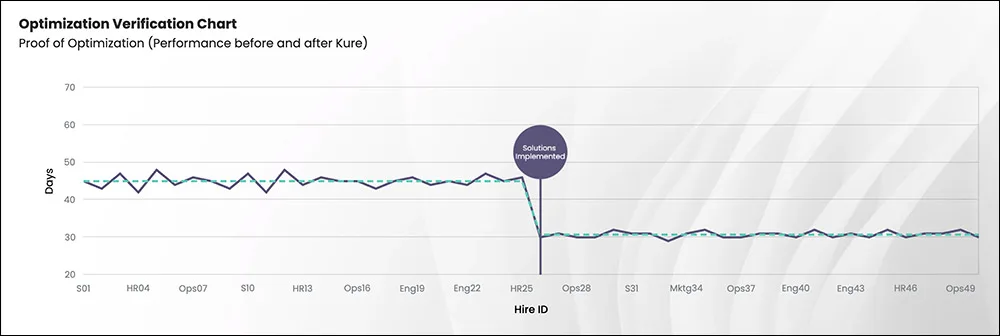
- The results: The organization reduced new hire onboarding time from 45 business days to 30 business days, a 33% improvement that accelerated employee readiness, reduced productivity losses, and created a more consistent onboarding experience.
Bringing talented people into an organization is only the first step toward building a high-performing workforce. Helping those employees become productive quickly is equally important. When onboarding processes are slow, disconnected, or inconsistent, organizations lose valuable time, experienced employees carry heavier workloads, and business goals become more difficult to achieve.
Recognizing an opportunity to improve both employee experience and operational performance, the organization selected GLSS’s Lean Six Sigma Green Belt Training & Certification to provide practical Lean Six Sigma methods that could be applied immediately. Throughout the project, the team embraced Ethical Efficiency™, by improving processes in ways that respected employees’ time, reduced unnecessary frustration, and made better use of organizational resources rather than simply expecting people to work harder.
The organization discovered that its onboarding process relied on multiple departments working independently with little coordination. New employees often waited for equipment, system access, and required training before they could begin contributing effectively.
Over a nine-month period, it took an average of 45 business days for a new hire to become independently productive, far exceeding the organization’s target of 30 business days.
The lengthy onboarding process delayed project delivery, increased pressure on experienced employees who filled staffing gaps, and contributed to employee burnout. In addition, the organization estimated the delays were costing approximately $15,000 per month, or nearly $180,000 annually, through lost productivity and additional training effort. Improving the onboarding process became an important opportunity to strengthen employee engagement while supporting future organizational growth.
After analyzing the process, the team identified several key issues contributing to the delays.
There was no standardized onboarding process to ensure laptops, system access, and required training were completed before an employee’s first day. Responsibilities were also unclear, with no single owner coordinating activities across Human Resources, IT, hiring managers, and other departments.
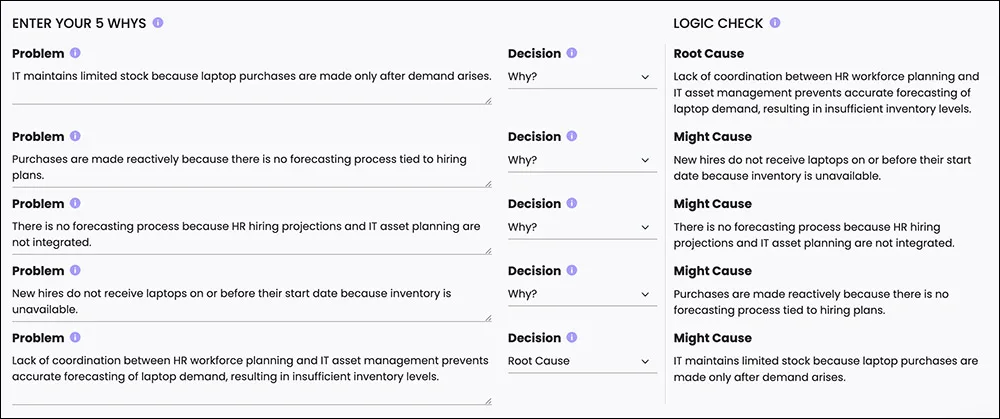
The team also found weak coordination between workforce planning and IT asset management. Without accurate forecasting, laptop inventory often failed to keep pace with hiring demand, creating unnecessary waiting time before new employees could begin working.
Using the tools and methods learned through GLSS Training & Certification, the improvement team redesigned the onboarding process to improve coordination, accountability, and visibility.
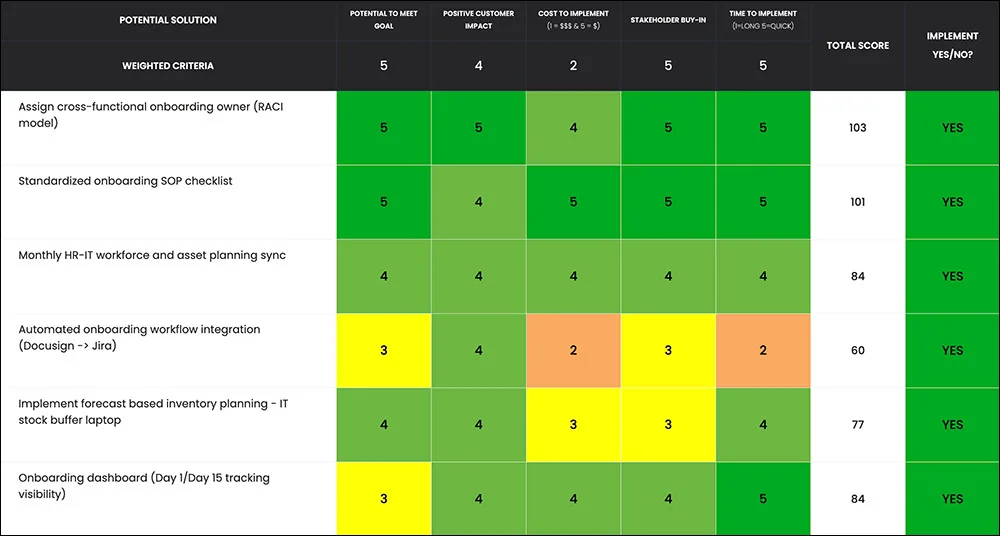
The team assigned a cross-functional onboarding owner using a RACI model to clearly define responsibilities across departments. A standardized onboarding checklist was introduced to ensure every new employee completed the same consistent process before beginning work.
Monthly planning meetings between Human Resources and IT improved hiring forecasts and ensured sufficient laptop inventory was available for upcoming hires. Automated workflow integration between DocuSign and Jira eliminated manual coordination while improving communication between departments.
Finally, the team implemented forecast-based inventory planning and introduced an onboarding dashboard that tracked employee progress on Day 1 and Day 15, allowing managers to quickly identify and resolve delays before they affected employee productivity.
The redesigned onboarding process delivered significant improvements across the organization.
- Average onboarding time decreased from 45 business days to 30 business days
- 33% reduction in onboarding lead time
- Productivity losses and training costs were significantly reduced
- New employees became independently productive much sooner
- Existing employees spent less time covering vacant positions and providing extended coaching
- A standardized onboarding process created a more consistent experience for employees and managers
By removing unnecessary delays and improving coordination, the organization created a faster, more predictable onboarding experience that benefited both employees and the business.
with GLSS
This project demonstrates how thoughtful process improvement can transform employee onboarding into a strategic advantage. By applying the practical methods taught through GLSS Training & Certification, the organization team successfully reduced onboarding time by 33%, helping new employees contribute sooner while lowering operational costs and reducing unnecessary workload on existing staff.
The project also reflected the principles of Ethical Efficiency by eliminating waste, improving planning, and creating a process that better supports employees rather than placing additional burdens on them. GLSS Training & Certification’s innovative instructional design emphasizes practical application, allowing teams to achieve measurable results more quickly while developing lasting improvement capabilities. With a streamlined onboarding process now in place, the organization is well positioned to support future hiring, strengthen employee engagement, and sustain operational excellence.
*We value our clients’ confidentiality. While we’ve changed their names, the results are real.