


Waipahu High School Students Reduced Event Set-up & Clean-up Time By 75% With GLSS
Home » Case Study » Waipahu High School Students Reduced Event Set-up & Clean-up Time By 75% With GLSS
Hawaii
Education
Finance
50%

Justine Claro
Waipahu High School Student
At Waipahu High School in Oahu, Hawaiʻi, students are encouraged to identify real challenges in their communities and develop meaningful solutions. One opportunity came from the Filipino Community Center, an important gathering place for cultural celebrations, community events, and festivals. With event set-up and clean-up taking as long as 120 minutes, disorganized storage was creating delays and unnecessary work for volunteers.
Justine John Claro and his classmates, participants in the GLSS Scholarship Program, took on the challenge using the problem-solving skills they developed through GLSS Training & Certification. By applying tools such as process mapping and 5S, the students set out to understand what was slowing the process down and create a simpler way to prepare for events.
“I figured that reducing the catered event setup time could help create a smoother experience for the staff and guests, allowing them to focus more on building community rather than managing delays.”
— Justine John Claro
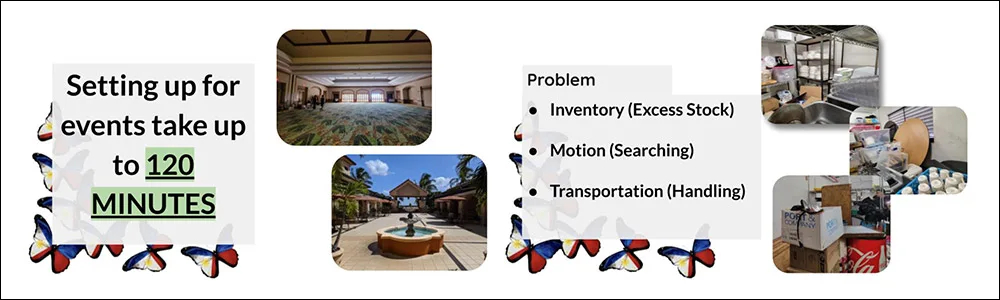
During visits to the Filipino Community Center, the team discovered that event materials were spread across multiple storage rooms without a clear organization system. Supplies were mixed together, mislabeled, or stored in difficult-to-reach locations.
As a result, volunteers spent valuable time searching for tables, decorations, cables, and other supplies. The team identified several forms of waste, including excess inventory, unnecessary motion, and transportation.
Instead of being able to focus on preparing a welcoming environment for guests, volunteers had to spend time searching for and moving materials. The students identified disorganized storage as a key root cause and established a clear goal: create a clean, structured, and easy-to-navigate inventory system that would make event preparation faster and easier.
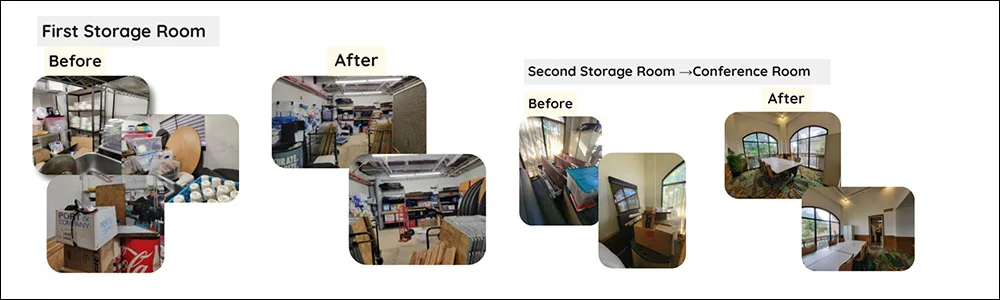
With the root cause identified, Justine and his team applied the 5S method to transform the storage areas.
They sorted materials to eliminate unnecessary clutter, organized supplies into clearly labeled sections, and cleaned the spaces to improve visibility and accessibility. The team then standardized the new layout so volunteers could quickly identify where materials belonged and developed simple guidelines to help sustain the improvements.
Their work created an additional unexpected benefit. By consolidating and organizing supplies, the students completely cleared one storage room, allowing the Filipino Community Center to repurpose it as a functional conference room for meetings and planning.
The results were significant. Event set-up and clean-up time decreased from 120 minutes to just 30 minutes—a 75% improvement. Volunteers could locate materials faster, move more efficiently, and prepare the venue with less frustration and unnecessary effort.
By applying GLSS methods to a real community challenge, Justine and his classmates demonstrated that process improvement skills can make an impact far beyond the workplace. Their project saved time, reduced waste, reclaimed valuable space, and made it easier for volunteers to focus on what mattered most: bringing people together.
“GLSS Training offered me problem-solving tools, which allowed me to approach problems systematically and provide sustainable solutions rather than finding quick fixes. The tools from GLSS made a measurable difference in my project’s success.”
Through learner-friendly training and hands-on application, GLSS Training & Certification gives students practical skills they can use to solve real problems and deliver measurable results. For the Waipahu High School team, those skills helped transform a frustrating process into a sustainable solution while creating a better experience for the community they served.