


Food Processing Organization Reduced Changeover Time By 53% With GLSS
Home » Case Study » Food Processing Organization Reduced Changeover Time By 53% With GLSS
Canada
Retail
Operations
53%
- The problem: A food processing organization was experiencing lengthy production changeovers that created unnecessary downtime, increased labor costs, and reduced equipment utilization during egg collection operations.
- After applying GLSS Training & Certification methods, the organization reduced average changeover time from 15 minutes to 7 minutes, a 53% improvement that reduced downtime, improved production flow, and increased operational efficiency.
In food processing, every minute of production matters. Delays during product changeovers can quickly reduce productivity, increase operating costs, and make it more difficult to meet customer demand. This food processing organization recognized that its changeover process represented a significant opportunity for improvement and wanted a practical, sustainable solution rather than a temporary fix.
To accomplish this, the organization partnered with GLSS’s Lean Six Sigma Green Belt Training & Certification aequipping its team with proven Lean Six Sigma methods and practical improvement tools. Throughout the project, the team also embraced the principles of Ethical Efficiency™, focusing on eliminating wasted time and improving the work experience for employees without increasing workloads or reducing staffing. The goal was to create a process that benefited both the business and the people performing the work every day.
Product changeovers had become the largest source of downtime within the egg collection operation. Every time production switched between different stock keeping units (SKUs), employees spent more time than necessary preparing equipment, updating date coding information, and managing production during the transition.
These delays reduced equipment utilization, increased labor costs, and interrupted the smooth flow of production. Without a consistent process, changeover performance varied between shifts, making it difficult to maintain predictable production schedules. Because efficient operations are essential for delivering quality food products on time, reducing changeover time became a high-priority improvement initiative.
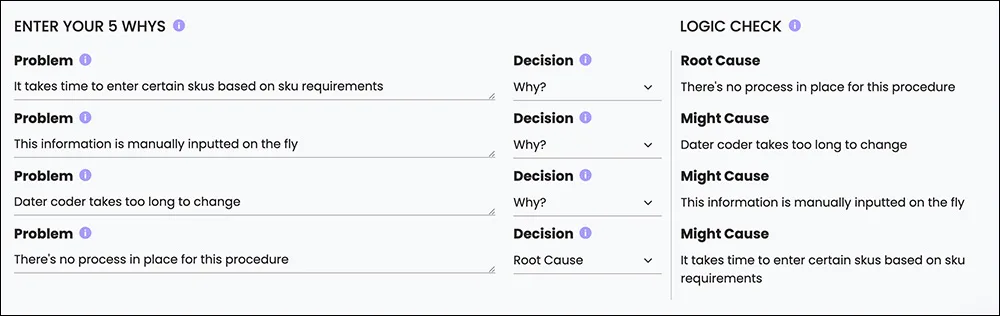
Using the GLSS problem-solving methodology, the improvement team identified several factors contributing to the delays.
Date coding information was often entered during the changeover instead of before production began, creating unnecessary downtime. Employees also lacked a consistent process for preparing the next production run, resulting in collection tables becoming overloaded as one product run ended and another began.
In addition, responsibilities during changeovers were not clearly defined, and no documented standard procedure existed. Employees relied primarily on personal experience, leading to inconsistent results and avoidable delays across shifts.
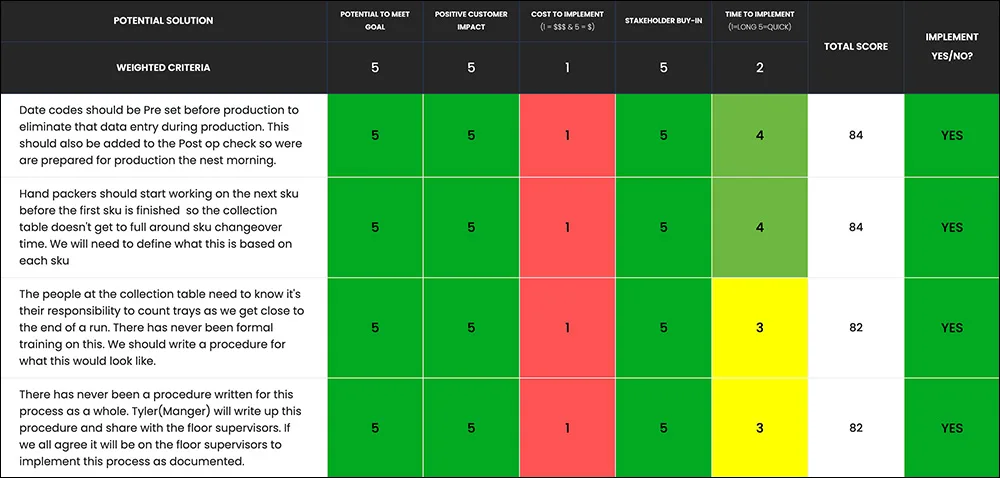
The team implemented several practical improvements using the methods learned through GLSS Training & Certification.
Date coding information was prepared before production and incorporated into the post-operation checklist so equipment was ready before the next day’s production began.
Hand-pack operators began preparing the next SKU before the current production run ended, allowing production to transition more smoothly while preventing collection tables from becoming overloaded. Employees assigned to the collection tables were given clear responsibility for monitoring tray counts as production neared completion, supported by standardized procedures and training.
Finally, the production manager documented the complete changeover process and established standardized work instructions that were shared with supervisors and consistently implemented across every shift.
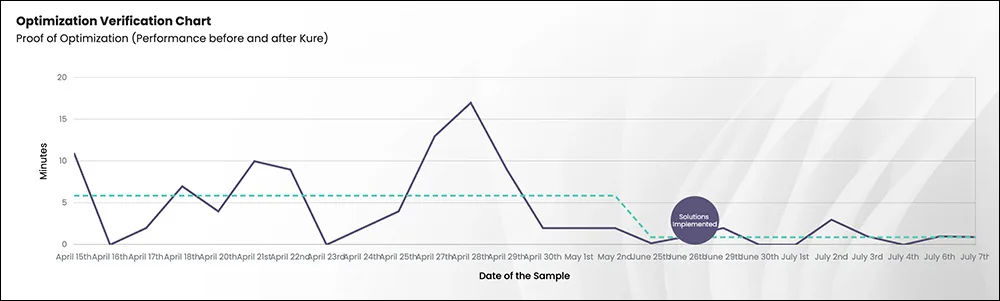
The improvements produced measurable operational gains throughout the egg collection process.
Average changeover time decreased from 15 minutes to just 7 minutes, representing a 53% reduction in downtime.
The standardized process improved equipment utilization, reduced labor costs, and created a more consistent production flow between product runs. Employees understood their responsibilities more clearly, transitions became more predictable, and the organization improved its ability to meet production schedules while maintaining product quality and customer satisfaction.
with GLSS
This project demonstrates how relatively small process improvements can produce significant operational results when supported by the right methodology and training. By applying the practical techniques learned through GLSS Training & Certification, the organization successfully standardized one of its most important production processes while reducing downtime by more than half.
The innovative instructional design and project-based approach of GLSS Training & Certification enabled the team to deliver measurable results quickly while building lasting continuous improvement capabilities. By applying the principles of Ethical Efficiency, the organization improved productivity through smarter processes rather than additional resources, creating a more consistent, efficient, and employee-friendly work environment. The success of this project provides a strong foundation for future operational improvements and positions the organization to continue growing with greater efficiency, consistency, and confidence.
*We value our clients’ confidentiality. While the names may be anonymous, the results are real.