


Canadian University Reduced Ticket Completion Time By 33% With GLSS
Home » Case Study » Canadian University Reduced Ticket Completion Time By 33% With GLSS
Canada
Education
Operations
33%
- The problem: Growing service ticket queues made it increasingly difficult for a Canadian university to prioritize critical work, slowing response times and reducing overall efficiency.
- After applying GLSS Training & Certification methods, the university implemented a structured ticket prioritization process that reduced average ticket completion time from 40 days to 27 days, an improvement of 33%.
As organizations grow, so does the volume of requests competing for attention. For project management and infrastructure teams, balancing daily operational work with long-term improvement initiatives can quickly become overwhelming without a consistent way to prioritize incoming requests. Delays not only affect productivity but can also impact the quality of service provided to internal stakeholders.
Recognizing the need for a more effective approach, the university partnered with GLSS’s Lean Six Sigma Green Belt Training & Certification to strengthen its process improvement capabilities. Through GLSS’s practical, project-based training, the team applied Lean Six Sigma principles to create a simpler, more organized ticket management process. Throughout the project, the team embraced Ethical Efficiency™ by eliminating wasted effort, improving the employee experience, and ensuring valuable improvement opportunities remained visible rather than being lost or forgotten.
The university’s infrastructure team faced an ever-growing queue of service tickets that made it increasingly difficult to identify which requests required immediate attention. As the queue expanded, staff spent more time reviewing and organizing requests instead of completing them.
The lack of visibility into priorities led to slower response times, reduced productivity, and frustration for both team members and stakeholders. Without a structured approach to managing requests, operational work and improvement projects competed for the same limited resources. Improving the process was critical to helping the organization maintain reliable service while making better use of employee time and resources.
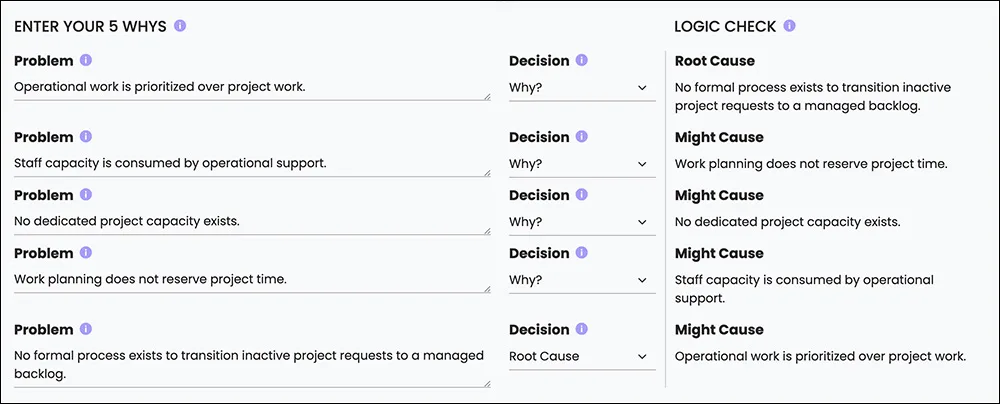
The project team determined that inactive and outdated requests remained mixed with active work because there was no formal process for managing them separately.
As older requests accumulated, the ticket queue became increasingly cluttered, making it harder to identify urgent work and delaying the completion of active requests. The absence of standardized prioritization created unnecessary complexity and reduced the team’s ability to respond efficiently.
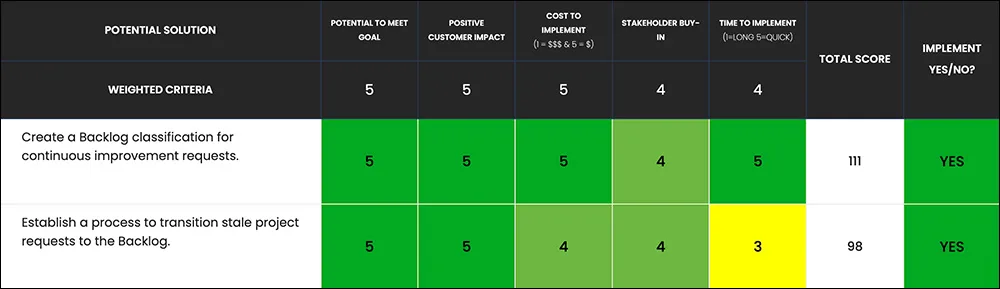
Using the improvement methods learned through GLSS Training & Certification, the team developed a practical system for organizing and prioritizing work.
The university introduced a dedicated Backlog classification for continuous improvement requests that were still valuable but did not require immediate action. The team also established a standardized review process to routinely identify stale requests and move them into the backlog.
In addition, the organization implemented a structured ticket prioritization and triage framework that classified requests into categories such as operations, projects, and orders. This common framework helped ensure that the highest-priority work consistently received attention first while preserving worthwhile improvement opportunities for the future.
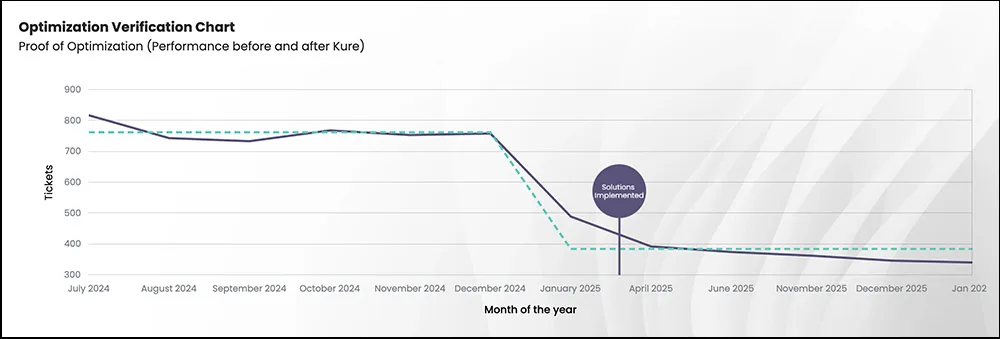
The new ticket management process created greater consistency, visibility, and control across the infrastructure team’s workload. With outdated requests removed from the active queue and a standardized prioritization framework in place, team members could more easily identify the most important work and respond efficiently.
- Before Improvement: Average ticket completion time: 40 days
- After Improvement: Average ticket completion time: 27 days
- Overall Improvement: 33% reduction in average ticket completion time
Beyond the measurable improvement, the Canadian university gained better workload visibility, faster decision-making, improved productivity, and greater responsiveness to stakeholder needs. The structured backlog also ensured that worthwhile improvement ideas remained available for future consideration instead of being overlooked.
with GLSS
This project demonstrates how a straightforward process improvement can produce meaningful operational results. By applying the practical methods taught through GLSS Training & Certification, the university established a repeatable system for managing service requests, prioritizing work, and improving responsiveness.
GLSS’s innovative instructional design combines streamlined learning with practical, real-world application, helping organizations achieve measurable results faster while developing lasting improvement capabilities. By incorporating Ethical Efficiency, the team reduced wasted effort while respecting employee time and preserving valuable opportunities for future improvement. With a more organized and sustainable ticket management process in place, the Canadian university is well positioned to improve service delivery, support future growth, and continue building a culture of continuous improvement.
*We value our clients’ confidentiality. While the names may be anonymous, the results are real.