


Healthcare Clinic Reduced Patient Check-in Time By 25% With GLSS
Home » Case Study » Healthcare Clinic Reduced Patient Check-in Time By 25% With GLSS
Texas
Healthcare
Operations
25%
- The problem: Patients were experiencing long delays during the check-in process, creating frustration for patients, stress for staff, and inefficiencies across the clinic.
- With GLSS, the healthcare organization reduced patient check-in time from 24 minutes to approximately 18 minutes, improving check-in efficiency by 25%.
Healthcare organizations must balance patient satisfaction, operational efficiency, and quality care every day. Even small delays in the patient journey can create larger disruptions throughout the clinic, affecting staff workload, appointment schedules, and the overall patient experience. That’s why process improvement is so important in healthcare environments. Streamlining workflows helps organizations reduce delays, improve communication, and create a smoother experience for both patients and employees.
To tackle these challenges, the organization partnered with GLSS’s Lean Six Sigma Green Belt Training & Certification. The team chose GLSS because of its practical, results-focused approach that made it easier to quickly identify problems, understand root causes, and implement meaningful improvements.
The project was also guided by the principles of Ethical Efficiency™, ensuring that operational improvements supported both efficiency and patient care. Rather than simply speeding up the process, the organization focused on reducing stress for staff, minimizing patient frustration, and creating a more reliable and supportive check-in experience.
The organization identified a major operational issue impacting clinic flow and patient satisfaction: patients were spending an average of 24 minutes completing the check-in process before they could be roomed.
These delays created bottlenecks at the front desk and slowed down the entire clinic schedule. Patients became frustrated waiting to begin their appointments, while front desk staff and medical assistants experienced growing pressure trying to keep appointments on time.
One of the biggest challenges involved missing insurance information. Many patients were scheduled for appointments without insurance details on file. As a result, front desk staff had to stop the check-in process to contact the billing department for insurance verification while patients waited.
In healthcare, these types of inefficiencies can quickly compound throughout the day. Delays in one step of the process often create additional delays across the clinic, impacting patient care, staff morale, and operational performance.
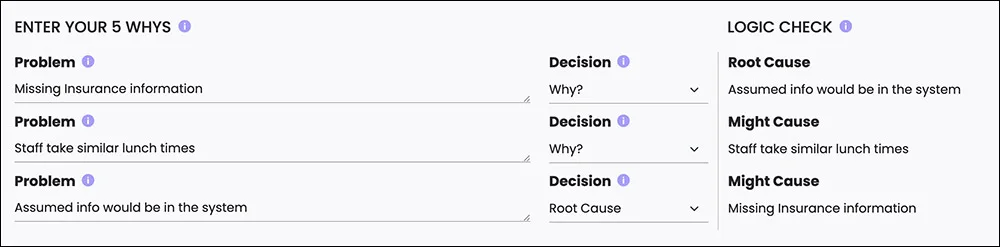
Through the improvement effort, the team identified a key root cause behind the long check-in times: patients could not complete the check-in process until their insurance information was verified.
Because insurance information was frequently missing during appointment scheduling, the verification work was pushed to the front desk during patient arrival. This created repeated interruptions and slowed down staff during peak check-in periods.
The issue became even more noticeable when billing staff were unavailable, such as during lunch breaks, causing additional delays for patients waiting to be processed.
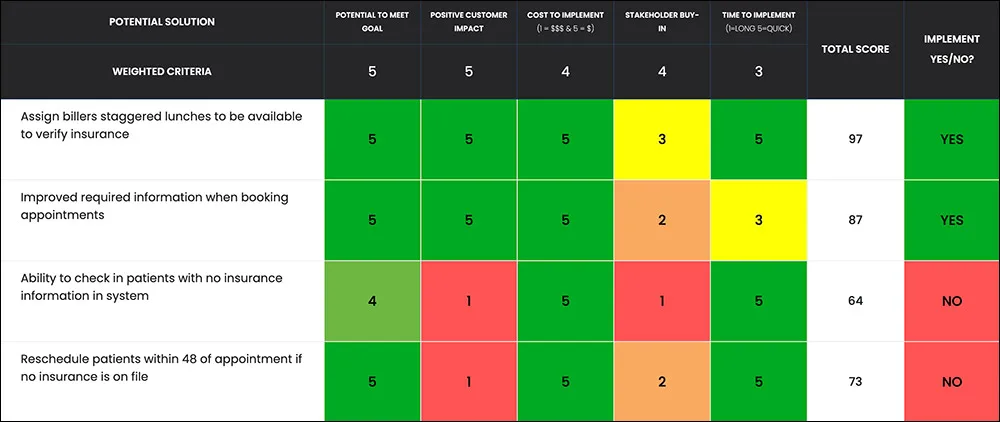
Using the structured methods learned through GLSS Training & Certification, the team implemented two practical improvements focused directly on the causes of delay.
First, billing staff adjusted lunch schedules to ensure at least one billing team member remained available during peak patient check-in hours. This reduced wait times for insurance verification and improved front desk responsiveness.
Second, the appointment scheduling process was updated to require insurance information before appointments could be confirmed. By collecting and verifying information earlier in the process, the clinic eliminated much of the verification work that previously occurred during patient arrival.
These simple but targeted solutions helped create a smoother and more efficient workflow throughout the clinic.
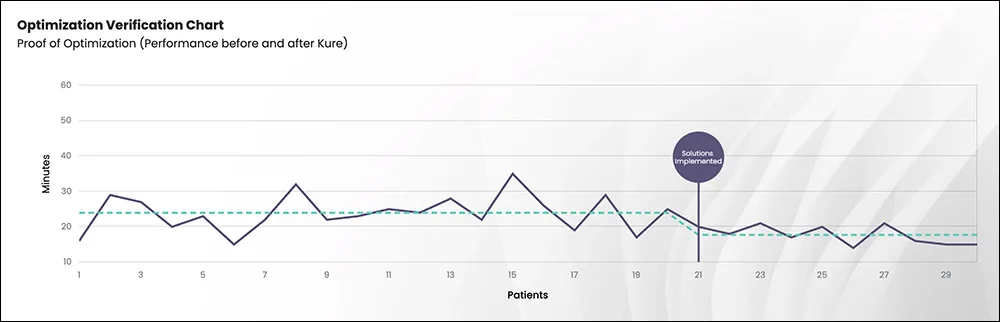
The improvements produced significant and measurable results. Patient check-in time decreased from 24 minutes to approximately 18 minutes, representing a 25% reduction in patient processing time.
With fewer delays at the front desk, medical assistants were able to room patients faster and maintain a steadier clinic flow throughout the day. Staff experienced fewer interruptions and reduced stress because they no longer needed to repeatedly contact billing during busy periods.
Patients also benefited from a more organized and efficient experience, helping improve satisfaction and confidence in the clinic’s operations.
with GLSS
This project demonstrates how focused improvement efforts can quickly create meaningful operational and patient experience improvements in healthcare settings. By identifying the root causes behind long check-in delays and implementing practical solutions, the organization successfully improved efficiency while creating a better experience for both patients and staff.
Through GLSS Training & Certification, the team gained a structured, easy-to-follow approach that helped them move from problem identification to measurable results quickly and effectively. GLSS’s innovative instructional design and real-world application enabled the organization to make sustainable improvements with confidence.
Grounded in Ethical Efficiency™, the project balanced operational performance with respect for people, communication, and long-term patient care outcomes. With these successful improvements in place, the organization is well-positioned to continue strengthening its processes and delivering exceptional healthcare experiences in the future.
*We value our clients’ confidentiality. While we’ve changed their names, the results are real.