

Farrington High School Students At Tanoa Use GLSS To Improve Retail Operations
Home » Case Study » Farrington High School Students At Tanoa Use GLSS To Improve Retail Operations
Hawaii
Education
Finance
50%

Kamryn Felipe, Neina Konman,
Precious Mailou, Junett Nakasone
Farrington High School Students
Tanoa Project Team
At Tanoa Hawaii, a clothing brand rooted in Polynesian heritage and culture, students were not only working part-time jobs; they were identifying real business problems. While Tanoa’s products were well-loved, one issue stood out across all store locations: the return process for online purchases completed in-store.
A student-led team of Kamryn Felipe, Neina Konman, Precious Mailou, and Junett Nakasone—all employees of the company—recognized the inefficiencies in the return process and chose to address them through their GLSS Yellow Belt project.
“Working at Tanoa, we saw the same inefficiency play out day after day. The return process wasn’t just inconvenient… It created stress for customers and added pressure on employees. We chose this project because we experienced the inefficiencies firsthand, and we saw an opportunity not just to fix a system we knew; but, to prove that even as students, we could drive real change inside a business we cared about.”
— Neina Konman
The team knew that product returns were a routine part of retail—but at Tanoa, “the process for returning online orders in-store weren’t efficient,” Junett notes. Despite having a return policy and digital tools in place, “customers usually arrived confused, unsure of what steps to follow or what documents to bring. Employees also had to manually verify orders, enter data, and manage returns alongside regular checkout transactions.”
The students saw this not just as a workflow issue, but as a barrier to customer satisfaction and team productivity. They began to ask: what if the return process could be redesigned to work better for both sides of the counter?
The team applied the Lean Six Sigma methodology step by step, just as they had learned in their GLSS Yellow Belt Training. They began by mapping the return process, outlining every step that both the customer and employee have to complete during an in-store return of an online order. Using the As-Is Map, they measured how long each return took and where delays most often occurred.
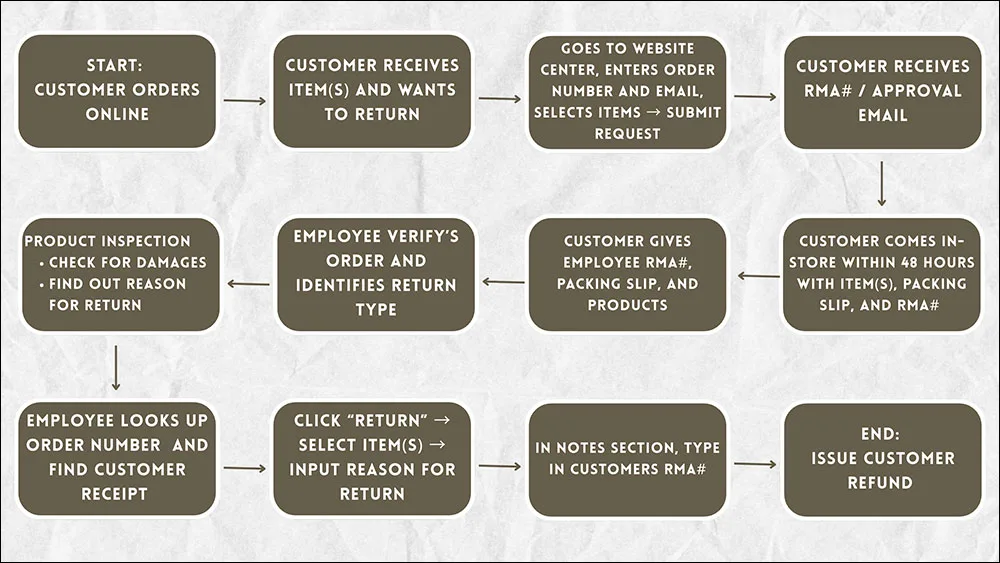
They marked key points in the process map—boxes outlined in red—where tasks were repeated, unclear, or slowed down the flow. These insights confirmed that the issue was not a single error, but a pattern of inefficiencies across multiple steps. With a clear view of the problem, they were ready to move into the Improve Phase with confidence and direction.
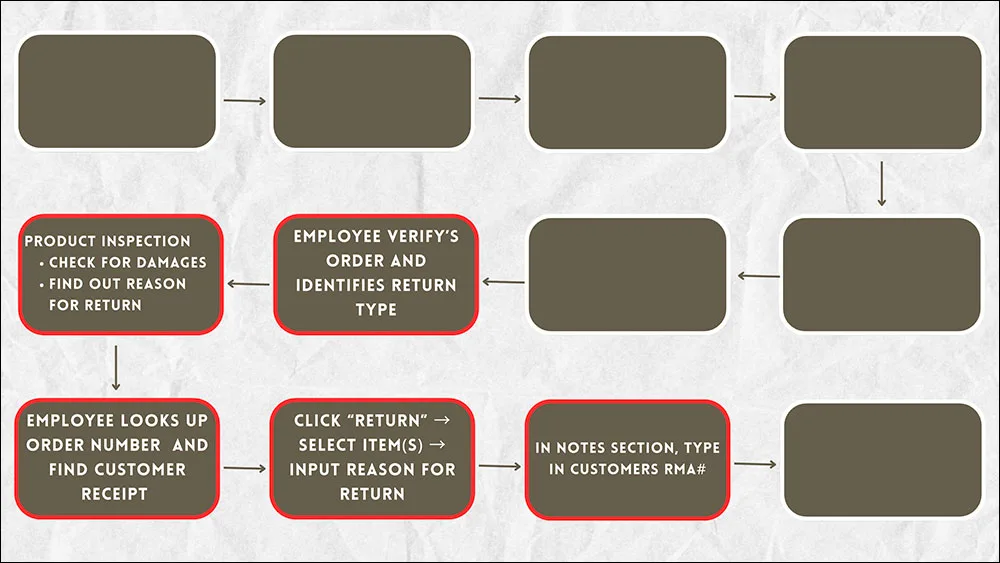
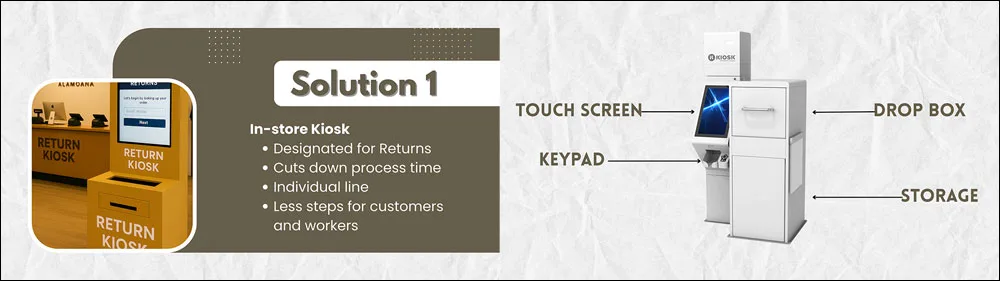
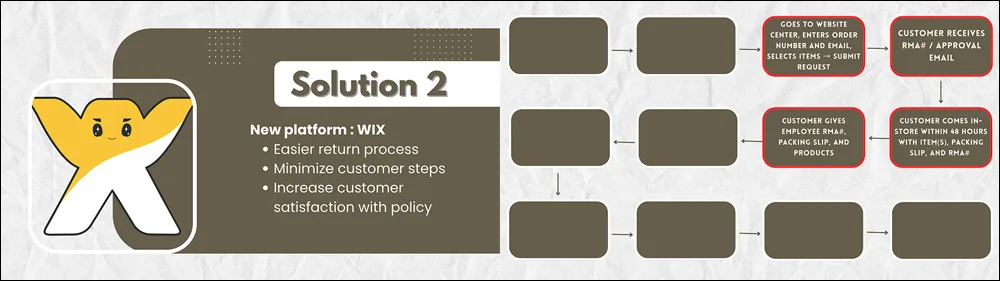
Customers would no longer have to wait in general checkout lines, and employees would spend less time verifying orders and manually entering Return Merchandise Authorization (RMA) details.
If implemented, this would mean fewer delays, fewer complaints, and a smoother experience for both customers and employees. Just as important, it demonstrated how frontline employees—when equipped with the right tools and training—could rethink everyday systems and propose practical solutions that improve real operations.
The Tanoa return project highlighted how everyday workplace frustrations can become opportunities for structured investigation and problem-solving. Using Lean Six Sigma as their framework, the students approached the issue like a real-world experiment—gathering data, identifying root causes, and testing ideas for improvement.
“GLSS Training helped me break a problem down and understand what was really going wrong. It gave me a process to find solutions that made sense, and I know that the skills I learned, especially through earning my GLSS Yellow Belt Certification, are something I’ll keep using in the future.”
— Kamryn Felipe