


How Farrington High School Students Doubled Prom Attendance With GLSS
Home » Case Study » How Farrington High School Students Doubled Prom Attendance With GLSS
Hawaii
Education
Finance
50%

Lauren Bacalso, Kay Mabanag,
Rain Ganuhay, Rylee Acosta
Farrington High School Students
Prom Project Team
At Farrington High School in Hawaiʻi, prom is one of the most anticipated events of the year. Yet in 2023, many students skipped Junior Prom—citing high costs, late announcements, and a lack of clarity regarding what the event offered. For a culturally diverse student population navigating financial constraints and academic demands, prom did not feel like a realistic or inclusive opportunity for everyone.
A group of students actively involved with their class student council—Rylee Acosta, Lauren Bacalso, Rain Ganuhay, and Kay Mabanag—recognized this challenge and used their GLSS Yellow Belt Training to create a more equitable, engaging, and sustainable prom experience.
“We chose to take this on as our Yellow Belt project because prom isn’t just about showing up in a dress or suit. It’s about feeling like you belong there. We weren’t trying to make prom ‘bigger’ or ‘grander,’… we were trying to make it matter to more people.”
— Rylee Acosta
Attendance data showed that only 217 out of 490 Juniors participated in the 2023 Junior Prom. To understand the low turnout, the team applied the Define and Measure phases of DMAIC, a data-driven improvement cycle. They defined the problem, collected data and mapped the process to uncover logistical and systemic barriers.
Through a structured Root Cause Analysis, they identified three critical challenges contributing to the issue:
- The high cost of attending prom ($100-$120 per ticket)
- Inconsistent or delayed promotional efforts; and
- Cultural misalignment with the diverse student population
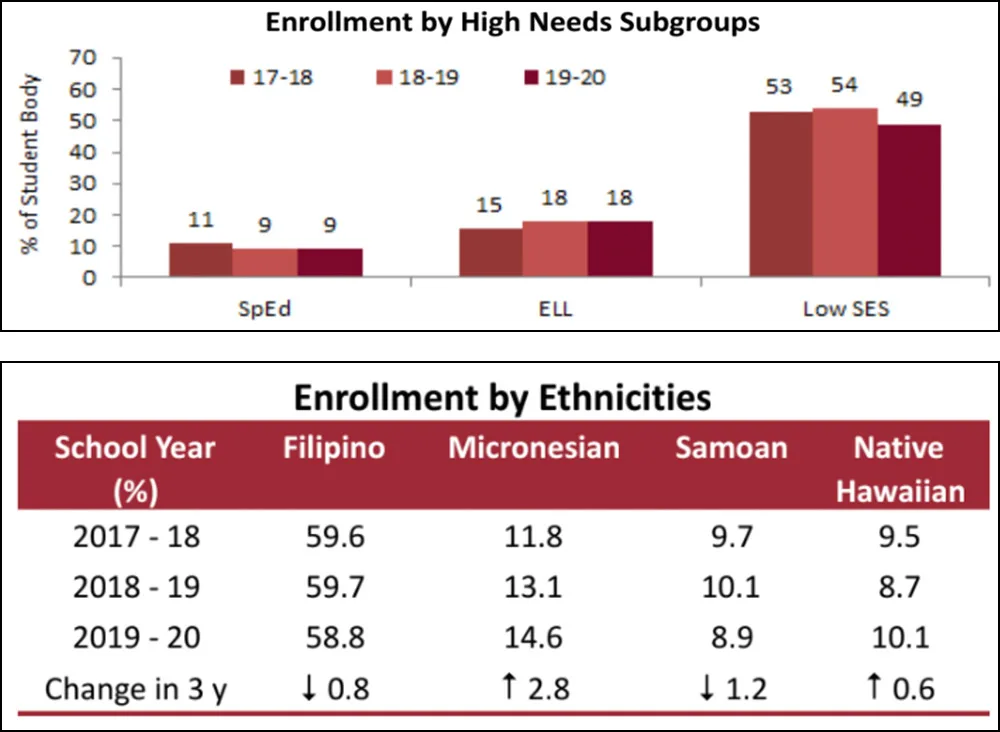
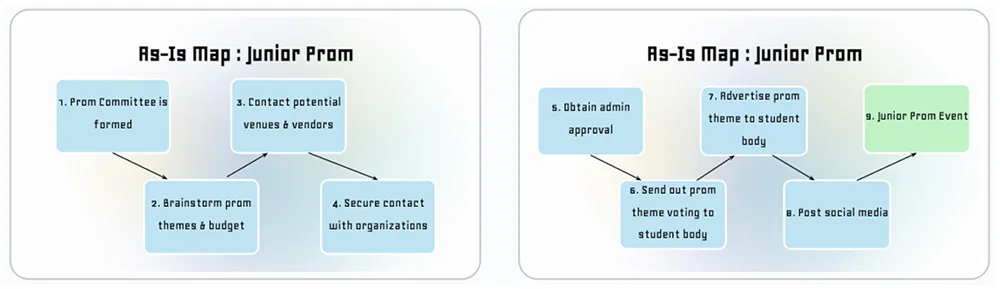
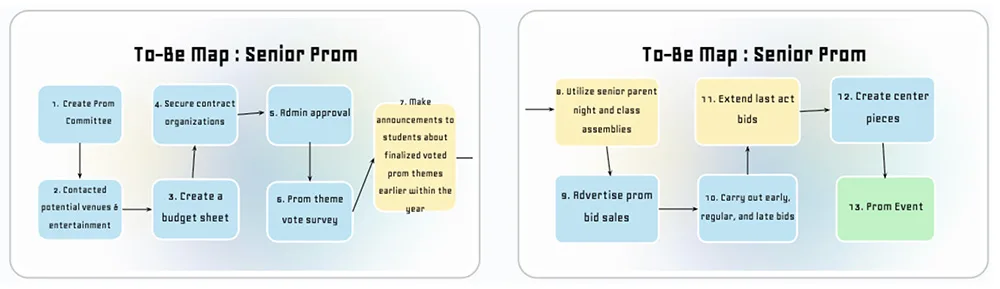
One of the most important changes was starting the planning process earlier. By shifting promotional activities, theme voting, and bid sales to earlier in the school year, the team gave students and families more time to prepare financially and emotionally for the event. In addition, they leveraged Senior gatherings as new communication channels to better share information and encourage participation.
The team also recognized that one of their most overlooked resources was their fellow students. By involving peers in areas like marketing, design, and logistics, they not only reduced costs but also strengthened class engagement and ownership—turning untapped potential into a strategic advantage aligned with Lean Six Sigma’s principles of eliminating waste and maximizing value.
When the newly designed process was implemented for Senior Prom, the results spoke for themselves. Attendance jumped to 416 students, a 91.7% increase compared to the previous year. Students reported feeling more informed, more excited, and more connected to the event—many attending prom for the first time.
“The Yellow Belt Training allowed us to move beyond surface-level assumptions and uncover the root causes of limited participation. This data-driven approach allowed us to design solutions by understanding not just “what was occurring,” but “why.”
— Kay Mabanag
Through their GLSS Yellow Belt project, Rylee, Lauren, Rain, and Kay used foundational Lean Six Sigma tools—such as Process Mapping, Root Cause Analysis, and Waste Identification—to improve not just an event, but the system behind it. Guided by the DMAIC framework and the Scientific Method, they translated student feedback into actionable insights, designed data-driven improvements, and implemented sustainable changes that nearly doubled attendance.
“We didn’t just change how prom was planned—we changed who it was built for. Getting Yellow Belt certified gave us the tools to make that possible. It was definitely worth it.”
— Lauren Bacalso