Manufacturer Increased Box on Demand Throughput By 38% With GLSS
Home » Case Study » Manufacturer Increased Box on Demand Throughput By 38% With GLSS
LOCATION
United States
INDUSTRY
Manufacturing
FUNCTION
Operations
IMPROVEMENT
38%
PROJECT SUMMARY
The problem: A critical packaging operation was limiting outbound flow, driving overtime, delivery pressure, and rising labor costs across the organization.
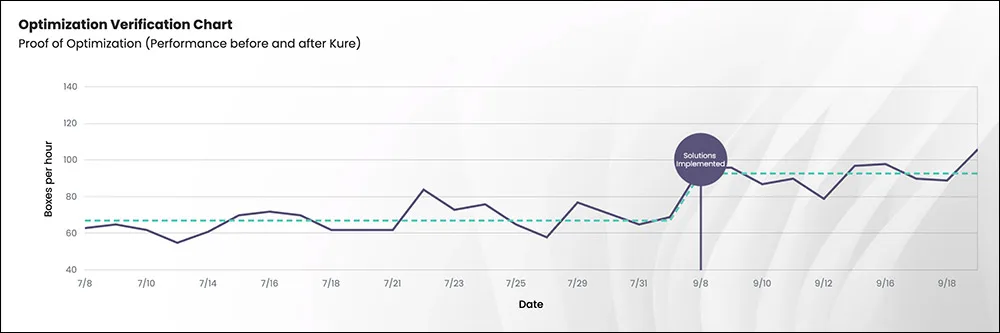
By improving training, equipment reliability, and workflow stability, the team increased throughput from 67 boxes per hour to an average of 92.8 boxes per hour—a 38% improvement that significantly reduced the bottleneck.
THE PROBLEM
Manufacturing organizations operate under constant pressure to increase throughput, control costs, and meet customer delivery expectations. When a single operation underperforms, the impact can ripple across the entire value stream. To address this challenge, the organization chose GLSS’s Lean Six Sigma Green Belt Training & Certification for its practical, hands-on approach to process improvement.
The team applied GLSS’s Ethical Efficiency™, philosophy—focusing on improvements that delivered measurable performance gains while supporting employees with clear expectations, training, and ownership. With the right structure in place, the organization launched a focused initiative to improve throughput and stabilize performance in a critical operation.
The Box on Demand machine was producing an average of 67 boxes per hour, making it one of the slowest points in the outbound process. This limited overall throughput and forced teams to rely on overtime and workarounds to meet shipping commitments. The constraint also increased stress on employees and negatively affected delivery performance. Improving output at this step was essential to controlling labor costs, restoring flow, and ensuring the operation could reliably meet customer demand.
THE ROOT CAUSES
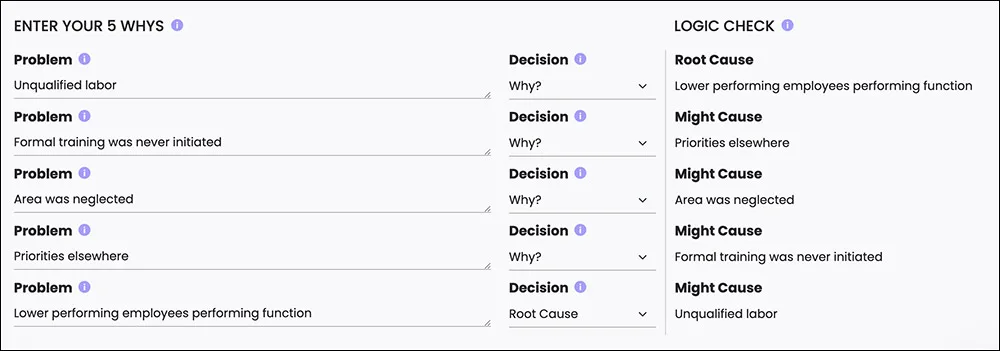
One root cause was inconsistent operator capability. Employees assigned to the Box on Demand function had varying levels of experience, and there was no standard process to ensure only trained, qualified operators were running the equipment. Another contributing factor was a change in leadership.
As priorities shifted, expectations around training, preventive maintenance, and accountability became inconsistent. This led to reduced focus on equipment care and performance stability, increasing downtime and variability in output.
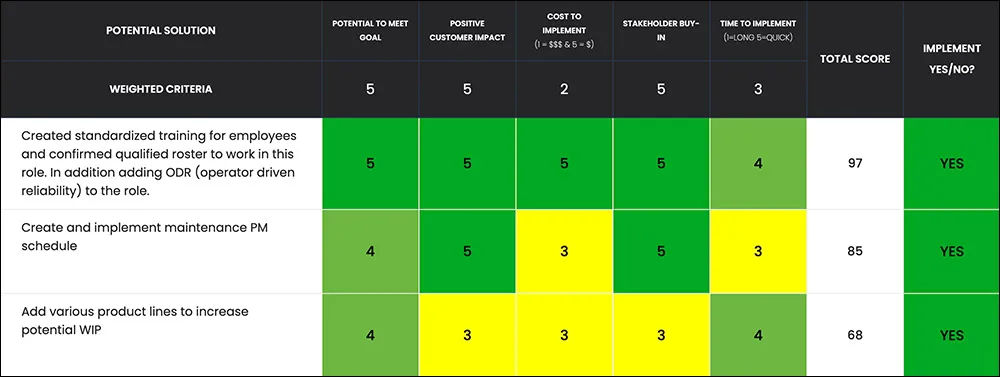
The first solution was to develop standardized training for the Box on Demand role and establish a qualified operator roster. This ensured that only properly trained employees were assigned to the machine. Operator-Driven Reliability (ODR) was also introduced, giving operators clear ownership of daily equipment checks and basic maintenance tasks.
The team also implemented a preventive maintenance (PM) schedule. By addressing issues before they caused breakdowns, unplanned downtime was reduced and machine performance became more consistent.
Finally, additional product lines were introduced to increase available work-in-process (WIP). This allowed the Box on Demand operation to stay productive and avoid idle time when specific products were not immediately available.
To automate the creation of the Solution Selection Matrix, try Kure.
THE RESULTS
The improvements delivered clear, measurable gains. Average throughput increased from 67 boxes per hour to 92.8 boxes per hour, representing a 38% improvement.
The Box on Demand operation was no longer a major bottleneck, overtime was reduced, delivery performance improved, and labor costs stabilized. Equally important, standardized training and clearer ownership increased operator confidence, engagement, and consistency on the floor.
To automate the creation of the Verification Chart, try Kure.
Start improving with GLSS
Through GLSS Training & Certification, the organization used innovative instructional design and practical improvement tools to achieve results more quickly. The structured approach helped teams identify root causes, implement sustainable solutions, and build frontline capability.
By applying Ethical Efficiency™, the organization delivered performance improvements that supported both operational goals and employee success—positioning the operation for continued improvement, greater reliability, and long-term operational excellence.
*We value our clients’ confidentiality. While we’ve changed their names, the results are real.
Start a free trial and get access to all GLSS courses (Yellow Belt, Green Belt, Black Belt, and more!) for only $499/year with a GLSS Subscription!