

How GLSS Empowered Farrington High Students to Revolutionize Financial Literacy Learning
Home » Case Study » How GLSS Empowered Farrington High Students to Revolutionize Financial Literacy Learning
Hawaii
Education
Finance
50%

Viane Nicole Ines
Farrington High School Student
Project Leader
At Farrington High School in Hawaii, students were learning lots of important subjects—but many felt unprepared when it came to managing money in real life. With the rising cost of living and big life decisions ahead, knowing how to budget, save, and spend wisely is more important than ever. Students wanted real-world financial skills they could use now and in the future—and they were ready to take the lead.
One of those students was Viane Nicole Ines, a dedicated student and project leader. Through her involvement in GLSS Training, she helped lead a team of fellow students to create a practical and empowering solution to the problem.
“For a long time, I didn’t know who to ask when it came to money. I kept turning to my parents, not because they had all the answers but because I didn’t know where else to go. The more I listened to others, the more I realized I wasn’t alone. A lot of us students were figuring out saving and budgeting as we went, without any real guidance. That’s when I stopped seeing it as just my problem and started seeing it as something we had the power to change.”
— Viane Nicole Ines
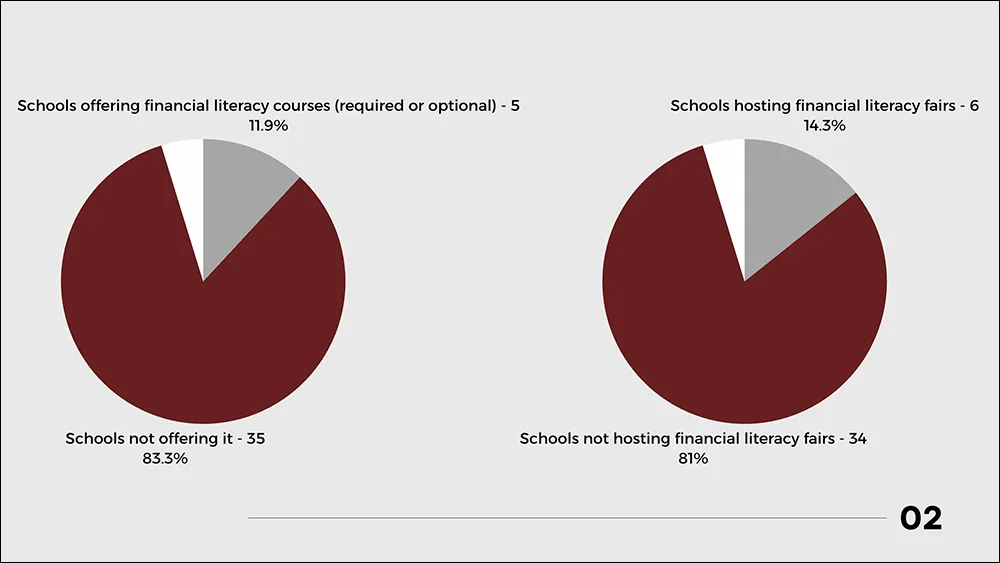
During their GLSS Training, Viane and her team learned how to define and understand a problem using Data Analysis. They discovered that Hawaii ranked 41st in the nation for financial literacy, and that only 5 out of 42 public high schools in the state offered any kind of financial literacy course. Slightly more schools—just 6—had ever hosted a financial literacy fair.
Even more surprising? Most students didn’t know how to use the 50/30/20 budgeting method—a simple framework that divide income into needs, wants, and savings. Only 35% of the 200 fair attendees could correctly answer basic questions about it. It was clear that students were not receiving the financial education necessary to succeed.
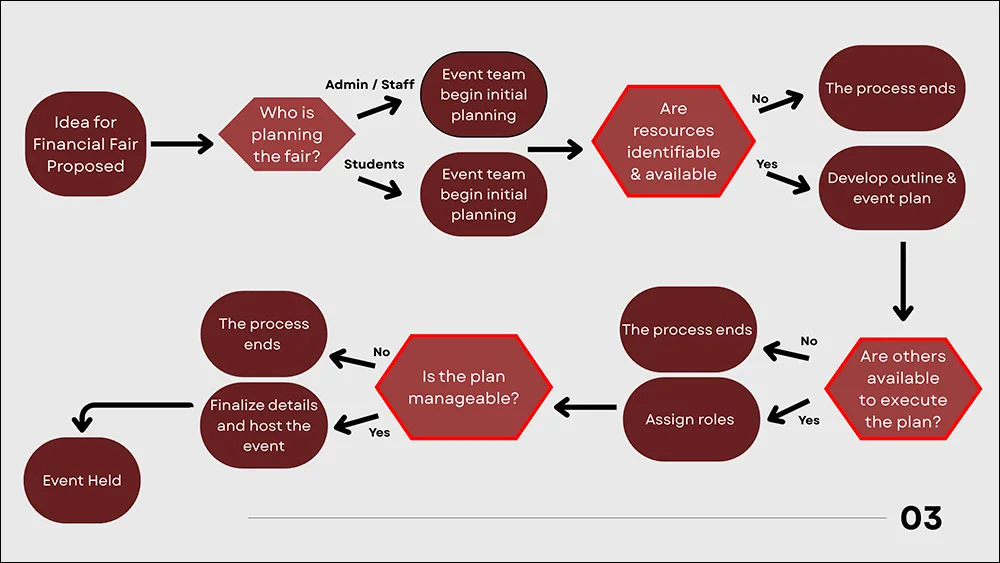
Using the Scientific Method and powerful Lean Six Sigma tools, which are part of the GLSS Training, Viane and the team worked to understand why most schools weren’t holding financial fairs by using Process Mapping and Root Cause Analysis. They talked with school staff, looked at past efforts, and found out that many schools didn’t have a clear plan or enough support to make these events happen.
So, they took action.
“We didn’t want this to be a one-time event. We wanted to create something schools could actually use—something built to last. Financial literacy isn’t just helpful. It’s essential. And every student should have a chance to learn it in a way that feels real and relevant.”
With Viane leading the way, the students helped create a step-by-step guide to help schools host their own financial literacy fairs. Then they partnered with industry professionals, local businesses, and community leaders to bring financial education to life. Their fair provided hands-on activities, practical tools, and real-life advice—all designed to help students become confident, financially empowered individuals ready to contribute to Hawaii’s future economy.
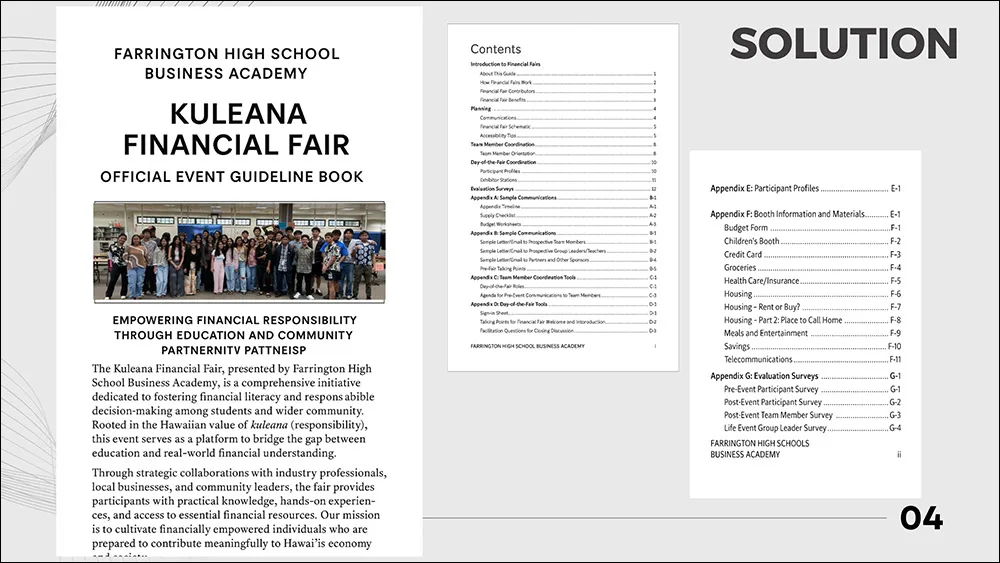
The fair was a big success! The number of students who understood the 50/30/20 budgeting method jumped from 35% to 71% after attending. Students said they felt more confident about making smart financial choices, and many were excited to start saving and planning for their future.
Thanks to their GLSS Training, Viane Nicole Ines and her team had the tools to work together, define a real-world problem, and create a lasting solution. They didn’t just host a great event—they inspired other schools to take action too.
With the right skills, teamwork, and community support, these students proved they could lead meaningful change and help shape a stronger, more financially smart future for Hawaii.
“What GLSS gave me wasn’t just a toolkit. It shifted my way of thinking. I started asking different questions. Not just ‘What’s the solution?’ but ‘What’s missing from the system that allowed this gap to exist?’ That mindset changed everything. It made me realize leadership isn’t about having answers. It’s about building what isn’t there yet.”