


Lab Equipment Manufacturer Decreased Return Material Authorization Turnaround Time By 55%
Home » Case Study » Lab Equipment Manufacturer Decreased Return Material Authorization Turnaround Time By 55%
New Jersey
Manufacturing
Operations
55%
- The problem: the average Return Material Authorization turnaround time had averaged around 33 days, well over the target. These long delays were driving customer frustration, increasing complaints, and costing the company significant service revenue.
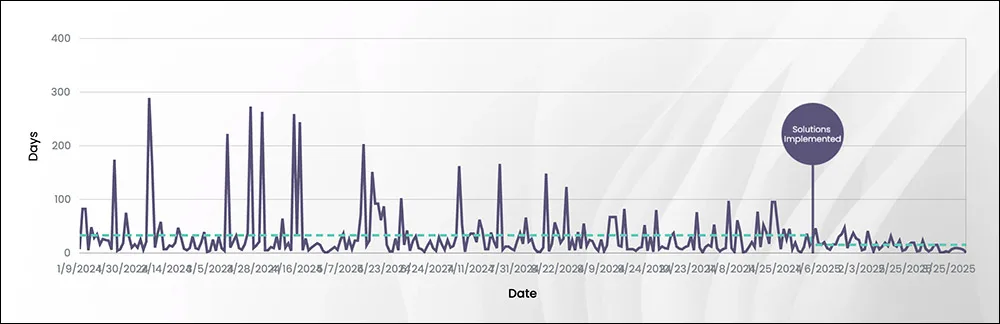
- Using the structured approach from GLSS, the team rolled out a series of focused improvements and reduced the RMA turnaround time from 33 to 15 days—a 55% improvement.
Every lab depends on its instruments running smoothly. When one goes down, the clock starts ticking—and every day lost can mean lost progress, productivity, and trust. Every extra day a machine sits idle waiting for repairs can delay experiments, disrupt operations, and strain relationships. One lab equipment manufacturer found themselves in exactly that situation—repair requests were piling up, and their Return Material Authorization (RMA) turnaround time had stretched far beyond target levels.
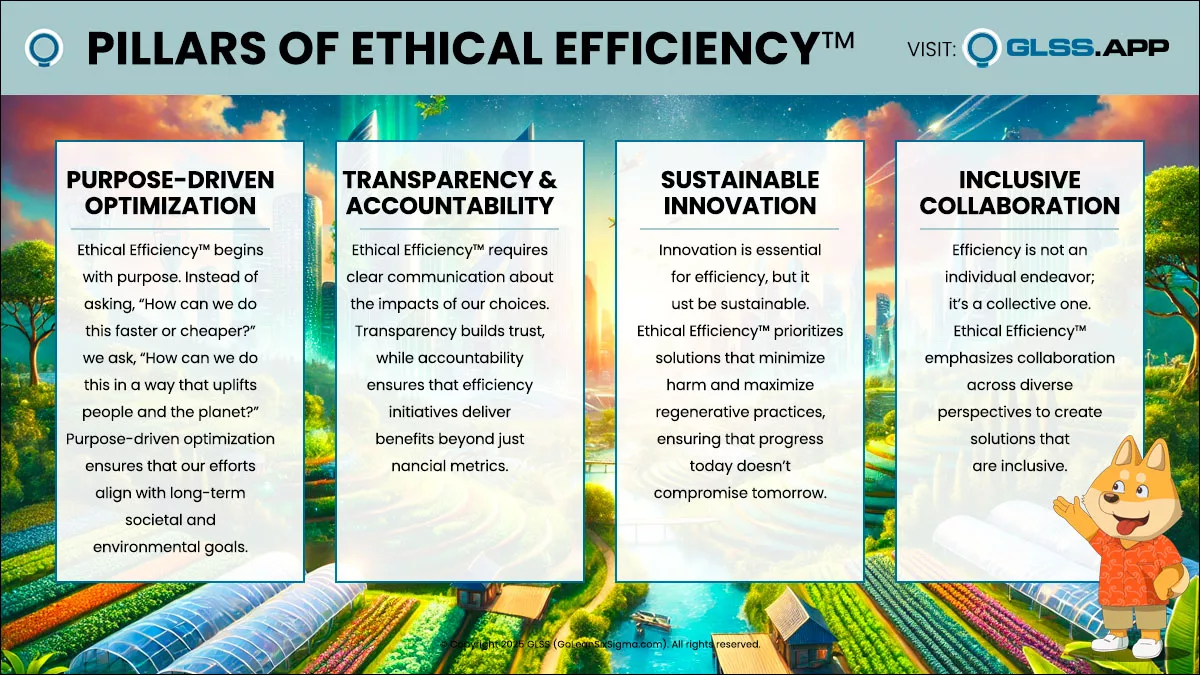
Determined to restore customer confidence and regain efficiency, the company turned to GLSS’s Lean Six Sigma Green Belt Training & Certification, known for its practical, real-world approach to process improvement. Guided by the principles of Ethical Efficiency™—where efficiency is powered by equity and endurance—the company sought not only to work faster, but also to create a fairer, more sustainable system that served both employees and customers well.
With GLSS’s proven methods, the organization equipped its team with the tools and structure to solve problems fast and deliver lasting results.
The company had set clear goals for RMA turnaround: 5 days for warranty repairs and 7 days for standard repairs and maintenance. The reality? Since 2022, the average turnaround time had averaged around 33 days, well over the target. These long delays were driving customer frustration, increasing complaints, and costing the company significant service revenue.
To remain competitive in such a precision-driven industry, process improvement wasn’t optional—it was mission-critical. The company needed a smarter, faster way to identify bottlenecks and eliminate waste. That’s why they enrolled their team in GLSS Green Belt Training & Certification—to gain the problem-solving tools and structured approach needed to take action and cut turnaround time dramatically.
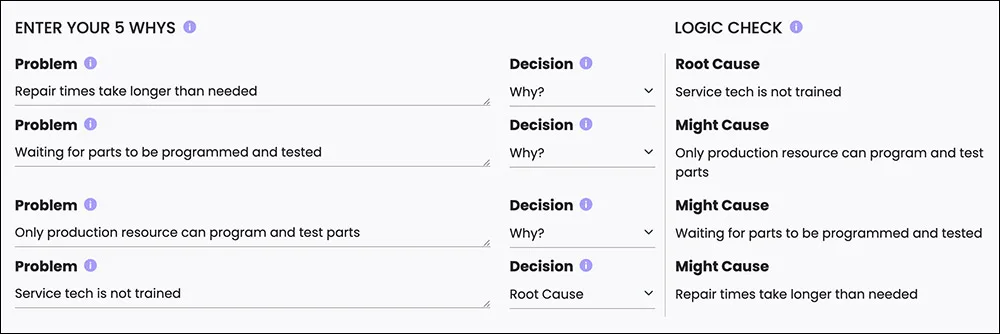
With guidance from their GLSS training, the team began mapping out the entire RMA process. What they discovered were everyday inefficiencies that had quietly built up over time:
- Manual data entry: Service representatives were copying and pasting details into Word documents instead of using automated systems—slowing everything down.
- Limited staffing: A hiring freeze had stretched the team thin, especially in technical areas that required specialized knowledge.
- Training gaps: Some technicians weren’t trained to program or test parts, forcing work to wait for the few who could.
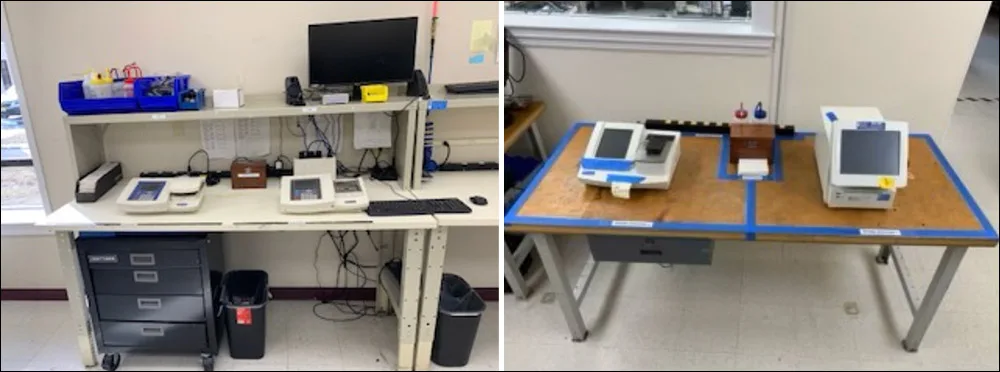
- Equipment shortages: The factory lacked enough carts, tools, and test fixtures, meaning technicians were constantly waiting for resources to free up.
Each issue on its own seemed small—but together, they created a system full of delays, rework, and frustration.
Using the structured approach from GLSS, the team rolled out a series of focused improvements:
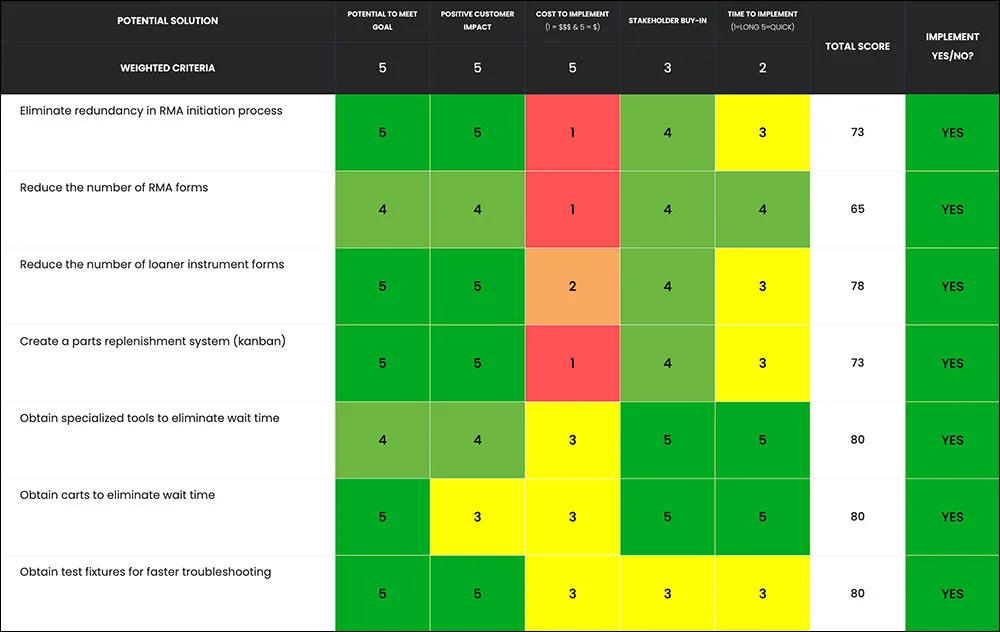
- Streamlined the RMA process by eliminating redundant forms and cutting down on paperwork—especially by using Crystal Reports in SAP to replace manual documentation.
- Reduced the number of RMA and loaner forms, saving time and effort.
- Introduced a Kanban system to keep critical parts in stock and eliminate waiting time.
- Purchased specialized tools, carts, and test fixtures to speed up repairs and testing.
- Cross-trained field service techs to help with Quality Control inspections, supporting faster handoffs and maintaining the QC team’s 2-day turnaround target.
- Rotated field techs through the factory, which eased travel demands and improved team collaboration.
The results were impressive. The team reduced the RMA turnaround time from 33 to 15 days—a 55% improvement. Crystal Reports alone cut 10 minutes off every RMA initiation, eliminated multiple forms, and saved over $1,075 per year. The new Kanban parts system removed delays, and the improved tool access helped repairs move faster.
The financial impact was equally strong: service revenue invoicing accelerated, with a projected annual revenue increase of $124,000. Additionally, rotating field techs through the factory led to better coordination and a projected $42,476 savings in travel expenses.
with GLSS
By choosing GLSS Training & Certification, this lab equipment manufacturer didn’t just fix a process—they transformed their culture. GLSS’s innovative, action-focused instructional design empowered the team to move from analysis to results faster than ever before.
The success of this project proved how Ethical Efficiency can create lasting value. By combining competence with care, the team not only improved operations but also strengthened relationships with customers and colleagues alike.
Now, with streamlined systems, confident employees, and proven results, the organization is positioned for long-term growth—ready to serve their customers with speed, quality, and integrity for years to come.
*We value our clients’ confidentiality. While we’ve changed their names, the results are real.