Fortune 500 Healthcare Pharmacy Reduced Prescription Backlogs By 25% With GLSS
Home » Case Study » Fortune 500 Healthcare Pharmacy Reduced Prescription Backlogs By 25% With GLSS
LOCATION
United States
INDUSTRY
Healthcare
FUNCTION
Operations
IMPROVEMENT
25%
PROJECT SUMMARY
The problem: A Fortune 500 healthcare pharmacy faced growing prescription backlogs that delayed patient care and increased pressure on staff.
With GLSS, the pharmacy reduced prescription carryover by 25%, improving speed, consistency, and overall patient experience.
INTRODUCTION
In the healthcare industry, timely prescription fulfillment is critical to patient safety and quality of care. Even small delays can lead to missed doses, increased health risks, and frustration for patients waiting on essential medications. Recognizing the need to improve both efficiency and reliability, the pharmacy partnered with GLSS’s Lean Six Sigma Green Belt Training & Certification to address these challenges.
Using GLSS’s structured, practical approach, the team worked to identify inefficiencies and implement meaningful improvements. Grounded in Ethical Efficiency™, the project focused not only on faster processing, but also on creating a clearer, more supportive work environment for staff while improving outcomes for patients.
THE PROBLEM
The pharmacy was experiencing a consistent backlog of prescriptions, with many scripts being carried over from one day to the next. Patients often waited longer than expected, sometimes for medications they needed urgently.
These delays created a ripple effect. Staff were required to work additional hours to catch up, increasing stress and reducing overall productivity. Over time, this strained both employee morale and the patient experience.
In a healthcare environment where timing directly impacts outcomes, improving this process was essential. Reducing delays was not just about efficiency. It was about ensuring patients received the care they needed, when they needed it.
THE ROOT CAUSES
Through analysis, the team uncovered several key contributors to the delays.
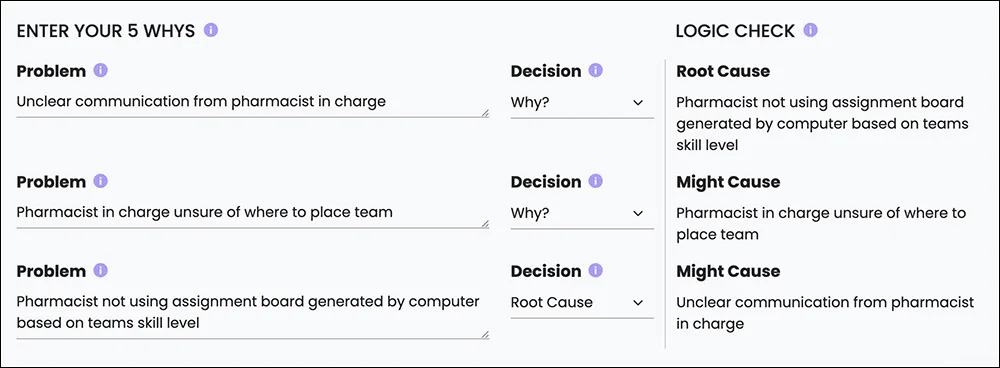
Workstation assignments were not consistently followed, and in many cases, expectations were unclear.
Team members were unsure where they should be working during a shift, leading to inefficiencies and duplicated effort.
Communication gaps between pharmacists and staff made it difficult to prioritize urgent prescriptions. Without clear direction, critical tasks were sometimes delayed or overlooked.
Awareness and use of the assignment board were inconsistent, leaving team members without clear visibility into responsibilities.
Patient communication also played a role. Many patients were not enrolled in medication notifications, and opportunities to encourage 90-day prescriptions were missed, increasing refill frequency and workload.
These combined issues created confusion, slowed workflow, and contributed to the growing backlog.
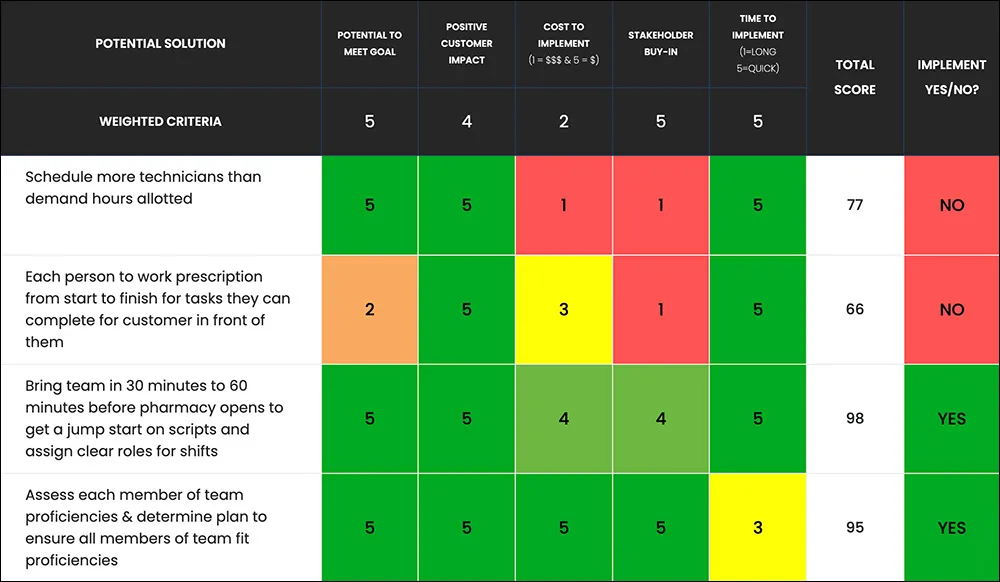
The team implemented several focused, practical solutions.
Staff began arriving 30 to 60 minutes before opening to process prescriptions in advance. This early start reduced the backlog before peak hours began.
Clear roles and workstation assignments were established at the start of each shift. This ensured every team member understood their responsibilities and where to focus their efforts.
Team member skills were evaluated, and responsibilities were aligned with individual strengths. This improved both speed and accuracy across the workflow.
Communication improved through clearer direction from pharmacists, helping prioritize urgent prescriptions and reduce confusion.
Together, these changes created a more structured, coordinated, and predictable process.
To automate the creation of the Solution Selection Matrix, try Kure.
THE RESULTS
The improvements delivered measurable impact.
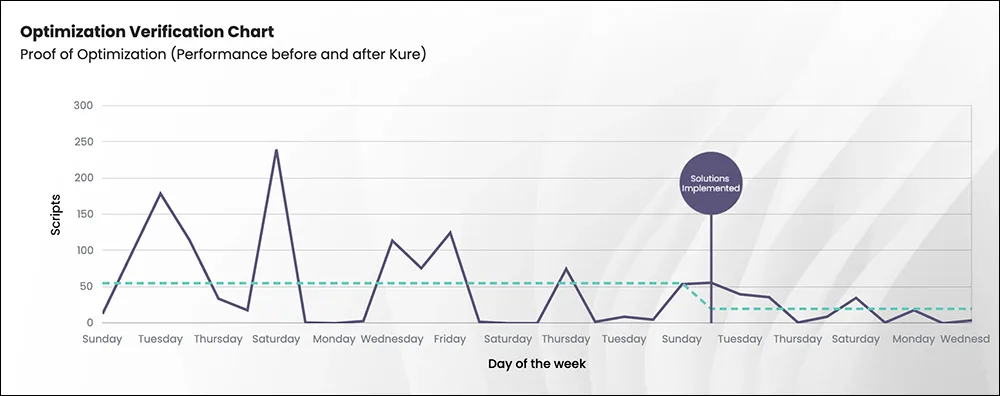
The pharmacy achieved a 25% reduction in prescriptions carried over from one day to the next, significantly decreasing backlog levels.
With fewer delays, prescriptions were filled more quickly and consistently. Patients received their medications on time, improving satisfaction and trust. Staff experienced reduced stress and required less overtime, creating a more sustainable and efficient work environment.
Overall, the operation became smoother, more reliable, and better aligned with patient needs.
To automate the creation of the Verification Chart, try Kure.
Start improving with GLSS
This project demonstrates how a healthcare pharmacy, supported by GLSS Training & Certification, turned a critical operational challenge into a meaningful improvement in patient care.
GLSS’s innovative instructional design and practical, easy-to-apply tools enabled the team to quickly identify root causes, implement targeted solutions, and achieve measurable results. By embedding Ethical Efficiency™, the team improved performance while also creating a clearer, more supportive environment for employees and better outcomes for patients.
As a result, the pharmacy is now better positioned to sustain these gains, continue improving its processes, and deliver faster, more reliable care to the communities it serves.
*We value our clients’ confidentiality. While we’ve changed their names, the results are real.
Start a free trial and get access to all GLSS courses (Yellow Belt, Green Belt, Black Belt, and more!) for only $499/year with a GLSS Subscription!