Postal Service Reduced Damaged Parcel Processing Time By 50% With GLSS
Home » Case Study » Postal Service Reduced Damaged Parcel Processing Time By 50% With GLSS
LOCATION
Canada
INDUSTRY
Postal Service
FUNCTION
Operations
IMPROVEMENT
50%
PROJECT SUMMARY
The problem: At this Postal Service, things were going smoothly until they opened a new plant in 2023. Suddenly, they experienced a sharp increase in damaged parcels, taking an average of 6 minutes per parcel to process. This slowed everything down.
In the world of parcel shipping, keeping things moving quickly and accurately is essential. Packages need to be processed fast, especially when something goes wrong. At a shipping depot in North York, Canada, things were going smoothly until they opened a new plant in 2023. Suddenly, a sharp increase in damaged parcels started slowing everything down.
Wanting to solve the problem without causing more pressure on their team, the organization turned to GLSS Green Belt Training & Certification. With its easy-to-understand tools and a focus on both results and people, it was the perfect fit to guide their process improvement journey.
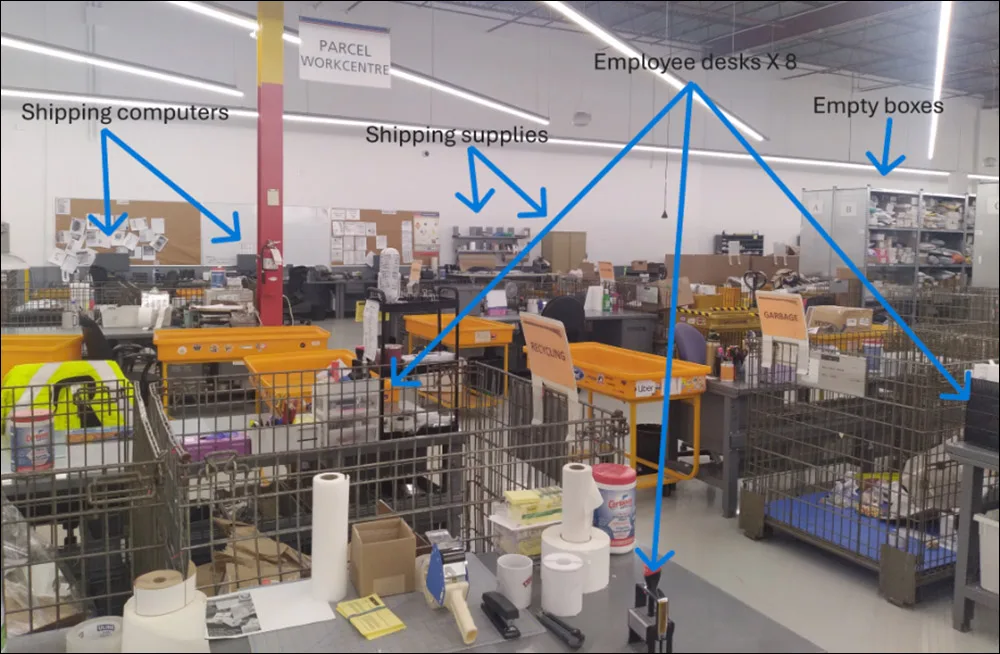
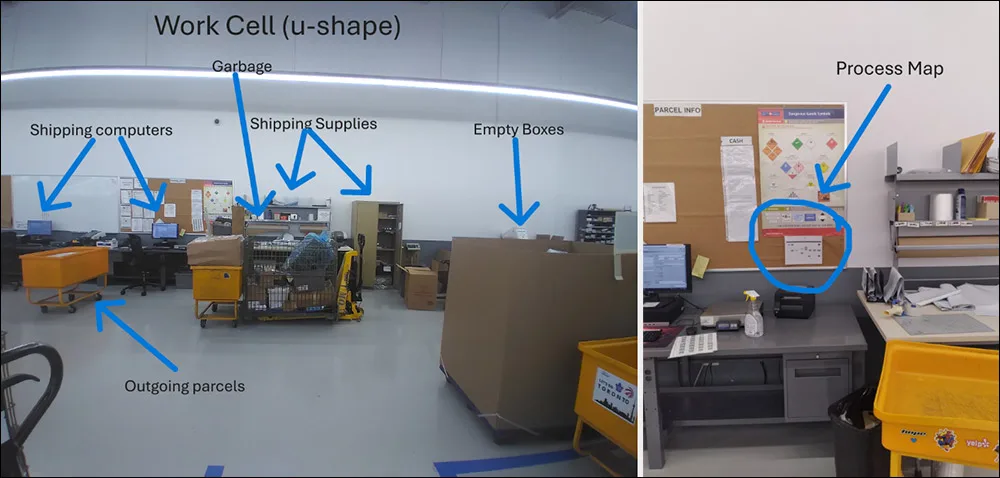
Work Center (Before)
The shipping industry is all about timing. One slow step can throw off the entire operation. After the new plant opened, the depot experienced a 70% increase in damaged parcels, and these weren’t regular shipments. Damaged packages needed special handling, and they were taking twice as long to process: 6 minutes each, compared to just 3 minutes for undamaged parcels.
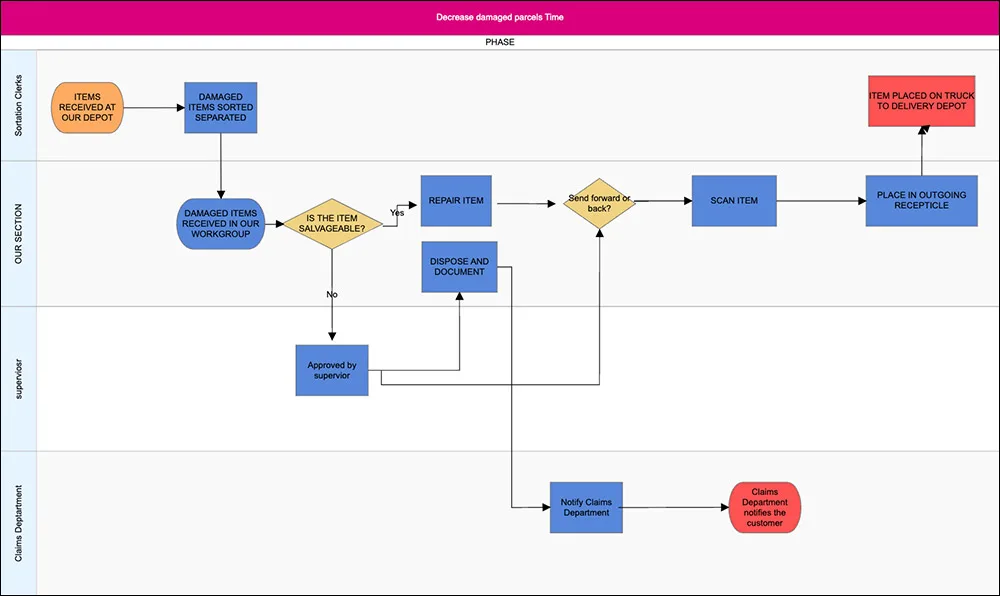
That extra time added up fast. As the team focused on damaged packages, the rest of the workflow fell behind. On-time delivery rates and key performance indicators were at risk. The company knew that process improvement wasn’t just helpful—it was critical to keeping promises to customers and supporting their hard-working team. First, they mapped the As-Is process and conducted a Process Walk to understand the current state.
To automate the creation of your As-Is Map, try Kure.
THE ROOT CAUSES
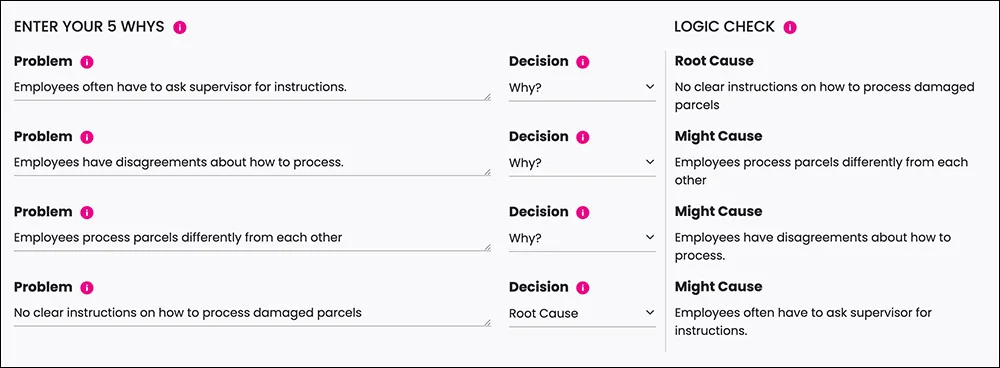
Thanks to GLSS training, the team learned how to analyze what was really going on. And they didn’t just focus on fixing numbers—they asked how changes could benefit both the business and the people involved, using Ethical Efficiency™ as their guide.
Here’s what they uncovered:
There were no clear instructions for handling damaged parcels, which meant delays, confusion, and extra approval steps.
Too many workers were assigned in pairs, leading to crowded work areas and long waits to use shared tools like shipping computers.
The layout didn’t make sense—employees had to walk back and forth across the room to complete simple tasks.
Multiple teams were involved, and each had to set up and start over, adding time and complexity with every shift.
These gaps weren’t just slowing things down—they were making work more stressful, less efficient, and harder to manage fairly.
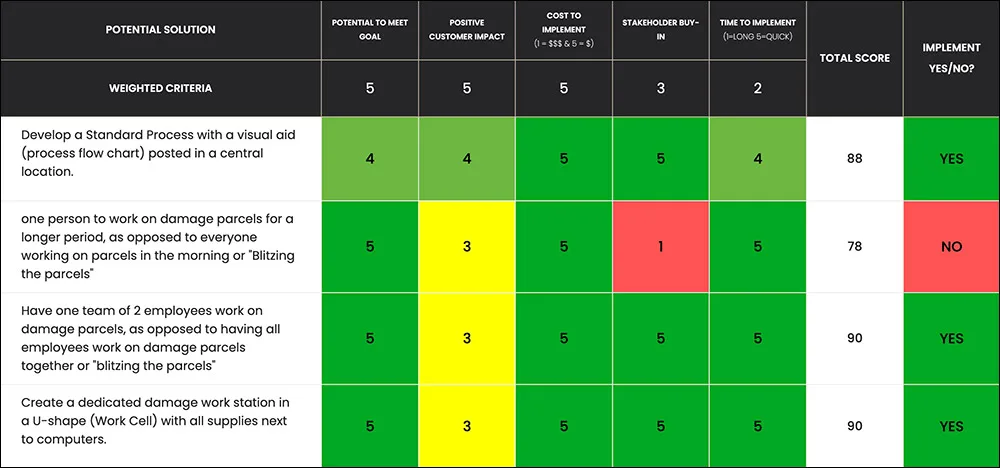
With support from GLSS and a focus on Ethical Efficiency, the team made smart changes that helped everyone do better work, without doing more work. Here’s what they did:
They created a clear, step-by-step process for damaged parcel handling, along with a visual guide posted for easy reference.
Instead of multiple teams jumping in and out, they assigned a dedicated two-person team to manage damaged parcels from start to finish.
They redesigned the workspace into a U-shaped “work cell”, where everything—supplies, labels, computers—was within easy reach.
These changes helped reduce unnecessary steps, cut down on confusion, and made the work more organized and respectful of everyone’s time.
To automate the creation of the Solution Selection Matrix, try Kure.
THE RESULTS
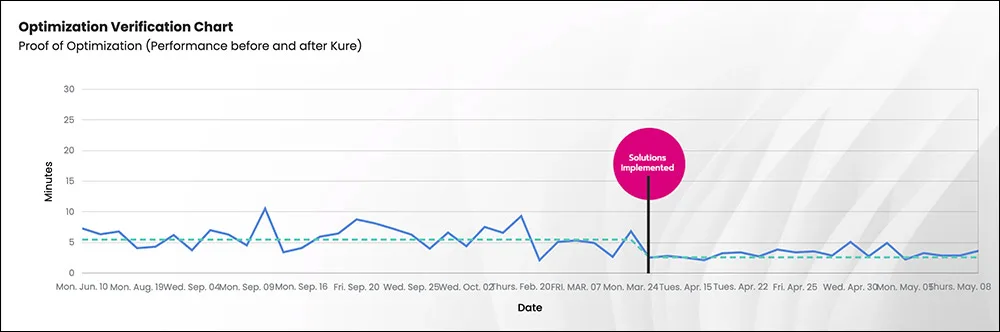
The impact was immediate. The team cut the average processing time for damaged parcels from 6 minutes down to just 3 minutes—a 50% reduction. That brought damaged parcel processing back in line with the rest of the operation.
Employees felt the difference, too. With a clear process and an efficient setup, they were less stressed, more confident, and better able to keep up with the growing workload, without feeling overwhelmed.
To automate the creation of the Verification Chart, try Kure.
After
Start improving with GLSS
By choosing GLSS Green Belt Training & Certification, the depot gained more than just process improvement tools. They learned how to think differently, solve problems together, and make changes that support both performance and people. The clear, easy-to-follow training helped the team act quickly and sustain their results.
This successful project didn’t just solve a frustrating problem—it set the stage for a stronger, smarter, and more ethical approach to growth. The depot is now better prepared for whatever challenges come next, with a team that’s ready to lead the way.
*We value our clients’ confidentiality. While we’ve changed their names, the results are real.
Start a free trial and get access to all GLSS courses (Yellow Belt, Green Belt, Black Belt, and more!) for only $499/year with a GLSS Subscription!