

Healthcare Organization Reduced Patient Safety Event Referral Time By 67% With GLSS
Home » Case Study » Healthcare Organization Reduced Patient Safety Event Referral Time By 67% With GLSS
United States
Healthcare
Operations
67%
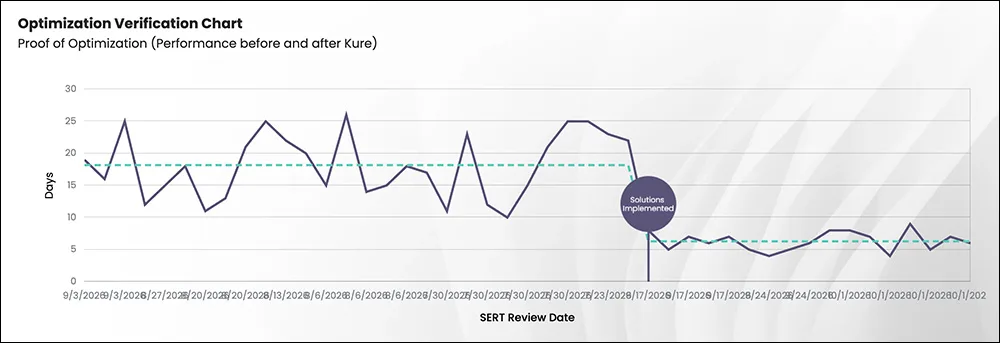
- The problem: A healthcare organization faced delays in referring patient safety event reports to its Safety Event Review Team (SERT). Without a standardized process for screening, following up, and reassessing reports, critical safety information could take an average of 18 days to reach the appropriate review team.
- The Results: With GLSS, the organization reduced average safety event referral time from 18 days to 6 days, a 67% improvement, helping accelerate safety reviews, strengthen accountability, and support more timely patient safety improvements.
In healthcare, timely safety reviews are essential for protecting patients, supporting employees, and preventing future incidents. When safety event reports experience unnecessary delays, organizations risk missing opportunities to address concerns while important details are still fresh.
To improve its review process, a healthcare organization turned to GLSS’s Lean Six Sigma Green Belt Training & Certification to equip its team with practical problem-solving skills and a structured approach to process improvement.
Guided by GLSS’s commitment to Ethical Efficiency™, the organization focused on more than reducing processing time. The project prioritized patient well-being, clear responsibilities, and timely access to information, ensuring that improvements supported both operational efficiency and safer patient care.
For healthcare organizations, responding quickly to patient safety events is essential to protecting patients, preventing recurring incidents, and maintaining high standards of care. Delays in reviewing safety reports can make it harder to gather accurate information, identify potential risks, and implement timely improvements.
One healthcare organization faced challenges with its safety event referral process, with reports taking an average of 18 days to reach its Safety Event Review Team (SERT). Inconsistent screening criteria, unclear follow-up responsibilities, and the absence of a standardized process for reassessing reports contributed to unnecessary delays.
These inefficiencies limited the organization’s ability to address safety concerns promptly and learn from reported incidents while important details were still fresh. Improving the referral process was critical to strengthening patient safety, supporting employees, and creating a more responsive healthcare environment.
Through Lean Six Sigma process improvement, the organization aimed to reduce referral delays, establish clear accountability, and ensure safety events received timely and appropriate attention.
The project team examined the existing safety event reporting process using Lean Six Sigma’s DMAIC methodology (Define, Measure, Analyze, Improve, Control).
Through process mapping and root cause analysis, the team identified several challenges contributing to delays:
- Inconsistent Screening: Reports lacked standardized criteria for determining when additional SERT review was necessary.
- Unclear Follow-Up Responsibilities: Reports requiring additional information did not always have clearly assigned owners.
- Missing Reassessment Procedures: Changes in an event’s severity did not consistently trigger another eligibility review.
- Limited Workflow Visibility: Without consistent alerts and tracking, reports requiring attention could remain in the review process longer than necessary.
These challenges created opportunities for delays, making it harder for the organization to respond quickly to potential safety concerns.
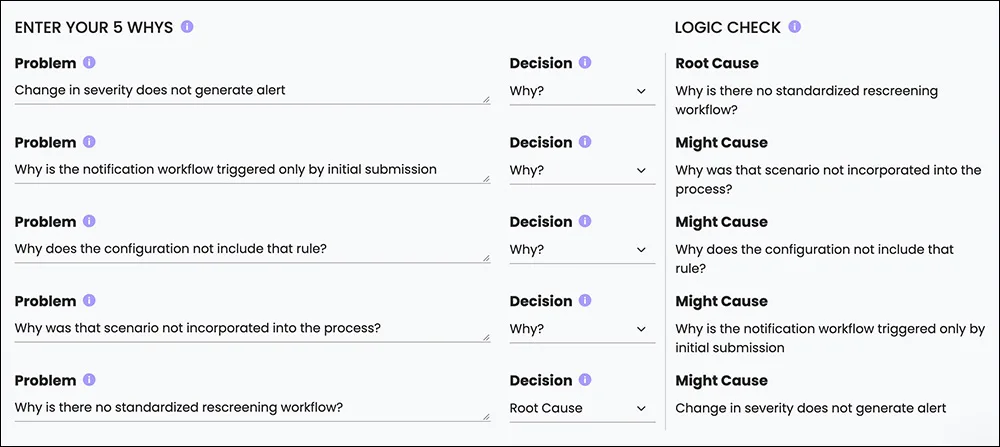
Using the skills developed through GLSS’s Green Belt Training & Certification, the project team redesigned the referral process to improve consistency, accountability, and responsiveness.
The team implemented several improvements:
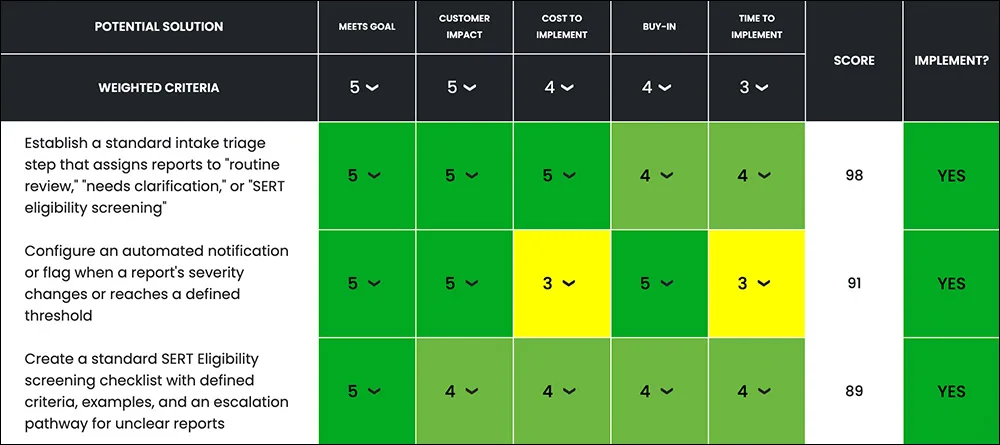
- Standardized Report Screening: Established clear intake categories to identify reports requiring routine review, additional clarification, or SERT eligibility screening.
- Automated Notifications: Introduced alerts to flag reports when event severity changed or reached a defined threshold.
- Clear Eligibility Criteria: Developed a standardized screening checklist with defined criteria and escalation guidance.
- Assigned Follow-Up Ownership: Established clear responsibilities and follow-up deadlines for reports requiring additional information.
- Daily Monitoring: Added a work queue to identify reports with severity changes and ensure timely reassessment.
These changes helped create a more reliable workflow while reinforcing Ethical Efficiency by ensuring that patient safety concerns received appropriate attention without unnecessary delays.
The redesigned process delivered measurable improvements in the timeliness of patient safety event referrals.
- Before: 18 Days
- After: 6 Days
- Improvement: 67% Reduction
By reducing average referral time by 12 days, the organization accelerated the review process and improved its ability to respond to patient safety concerns. Additional benefits included clearer accountability, more consistent screening decisions, and improved visibility into reports requiring follow-up.
These improvements established a stronger foundation for ongoing monitoring and continuous patient safety improvement.
with GLSS
By applying Lean Six Sigma principles, the healthcare organization transformed its safety event referral process into a more efficient, consistent, and accountable system.
GLSS’s Lean Six Sigma Green Belt Training & Certification combines innovative instructional design, practical tools, and real-world application to help professionals solve problems and achieve measurable results faster. With a 67% reduction in referral time, the organization demonstrated how Ethical Efficiency™ can improve operational performance while keeping patient safety and employee well-being at the center of every decision.
The successful project positions the organization to sustain its improvements, respond more effectively to future safety concerns, and continue building a culture of proactive patient care.
*We value our clients’ confidentiality. While the names may be anonymous, the results are real.